



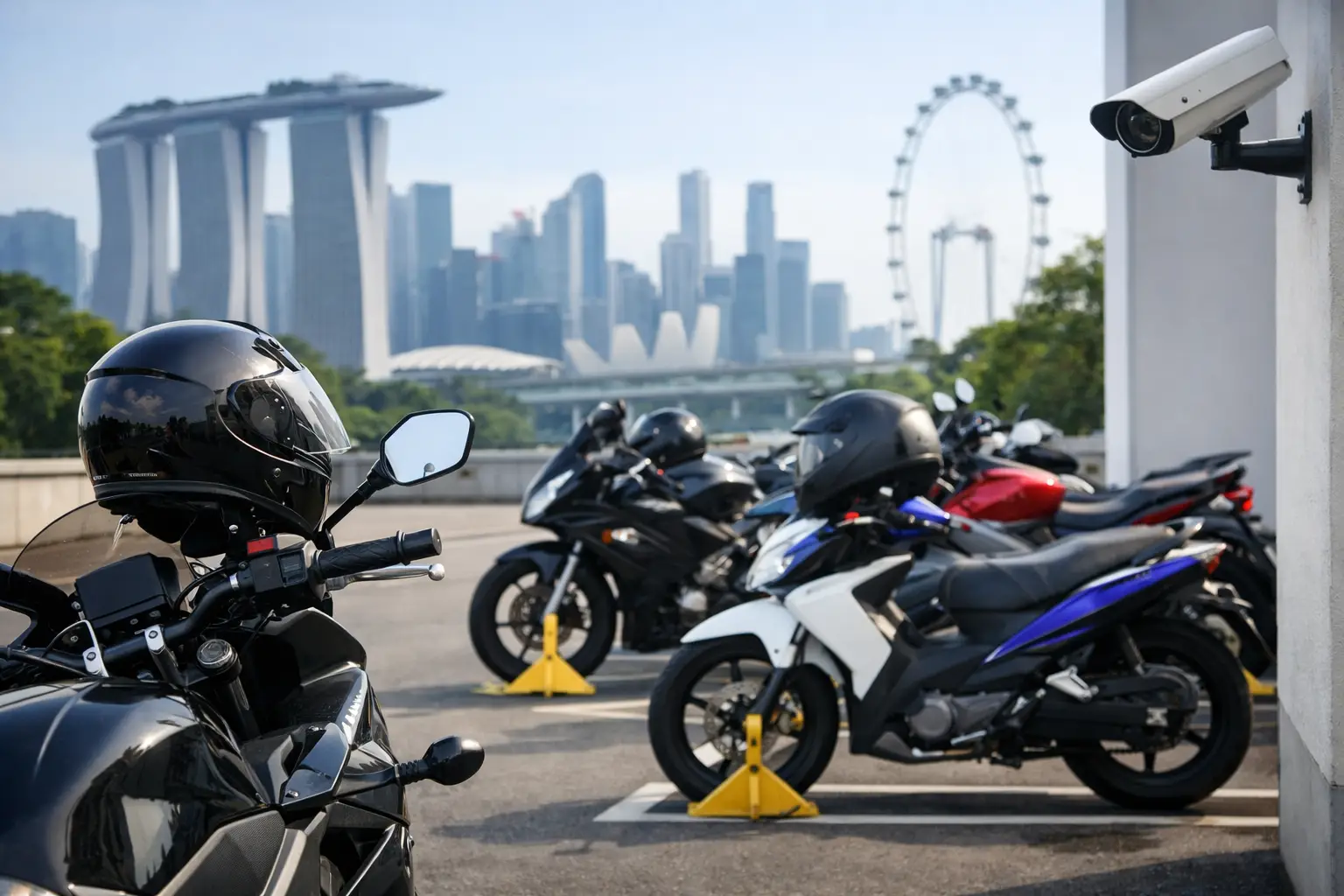
How to Secure Motorcycle Parking in Singapore
The ride is over, your helmet is off, and you are already thinking about the next thing on your schedule. That is exactly when rushed parking decisions happen. Knowing how to secure motorcycle parking is not about making your bike impossible to steal or damage. It is about making it a difficult, visible, time-consuming target while reducing the chances of an avoidable incident.
For Singapore riders, parking is part of daily life. You may leave your bike at an HDB lot, an MRT station, a mall, an office building, or outside a friend’s place. Each location presents a different level of exposure. A few practical habits can protect your motorcycle, your accessories, and your peace of mind.
Start With a Safer Place to Park
Your choice of lot matters before any lock comes out. Look for areas with good lighting, steady foot traffic, and visible cameras or security patrols. A motorcycle parked close to an entrance, guard post, elevator lobby, or active storefront is generally a less attractive target than one hidden at the far end of a quiet deck.
At a multistory car park, avoid isolated corners and stairwell-adjacent spaces where someone can work without being noticed. If the location has designated motorcycle bays, use them. Parking neatly within the marked area also reduces the risk of your bike being knocked over by another rider, a car door, or someone squeezing through a narrow lane.
There is a trade-off. A highly visible lot can mean more pedestrians walking nearby and a greater chance of scratches or accidental bumps. Still, visibility usually works in your favor when security is the priority. If you are parking overnight, choose surveillance and lighting over convenience whenever possible.
Do Not Leave It Where It Blocks Easy Exit Routes
Think about how someone would move the motorcycle if they had bad intentions. A bike at the edge of an open lot, pointed toward a quiet exit, can be easier to roll away than one placed among other parked motorcycles. When possible, back into the bay so the front wheel faces a wall, curb, or another fixed obstacle. This makes quick maneuvering more awkward.
If you are parking with friends, group the bikes close together. It is not a replacement for locks, but it creates more physical clutter and makes suspicious activity more noticeable.
Use Layers, Not One Lock
The most effective motorcycle security setup uses more than one deterrent. A thief may know how to defeat one device, but every added layer costs time, creates noise, or draws attention. Your goal is to make another bike look easier.
Start with the steering lock every time. It takes seconds and stops the handlebars from turning normally. However, a steering lock by itself is not enough for long stays or overnight parking.
Add a quality disc lock, preferably one with an alarm. Fit it to the front brake disc where you can see it clearly before riding off. An alarmed disc lock can draw attention if the bike is moved or the wheel is turned. It also acts as a visible warning before anyone touches the motorcycle.
For longer parking periods, use a hardened chain and padlock through the frame or rear wheel, ideally securing the bike to a fixed anchor. The chain should be kept off the ground as much as possible. A chain lying on the pavement gives an attacker a solid surface to strike against. A shorter, thicker chain is usually more practical and harder to defeat than a long, lightweight one.
Do not run a chain only through a wheel that can be removed. Wherever the motorcycle and parking setup allow, pass it through a strong part of the frame or swingarm and around a fixed object designed to resist cutting or lifting.
A Simple Locking Routine Prevents Costly Mistakes
Good equipment only works when you use it consistently. Build a routine that takes less than a minute before you walk away:
- Turn off the ignition, remove the key, and engage the steering lock.
- Apply the disc lock and check that it is fully seated on the brake disc.
- Use a chain for overnight, remote, or extended parking.
- Put a reminder cord from the disc lock to the throttle or brake lever so you do not ride off with it attached.
- Check that your helmet, gloves, and bags are not left exposed on the bike.
That reminder cord may seem small, but it can save you from damaging a brake disc, front fender, or fork by forgetting the lock is in place. Security should make your routine easier, not create a repair bill.
Keep Accessories and Personal Items Out of Sight
A motorcycle does not need to be stolen for parking to become expensive. Loose accessories are easy opportunities. Do not leave cash cards, documents, keys, chargers, action cameras, or Bluetooth headsets in a top box unless it is properly locked. Even then, treat a top box as a convenience feature, not a safe.
Helmets are another common concern. A basic helmet hook is useful for a quick stop, but it does not offer much protection against damage or theft. Take an expensive helmet with you, especially if you are parking for several hours. If carrying it is not practical, use a helmet lock that secures the D-ring and keeps the helmet off the ground.
Phone mounts, auxiliary lights, and detachable luggage should also be checked. Use security bolts where appropriate, but remember that unusual screws alone will not stop a determined person. They simply add friction to a quick grab-and-go attempt.
Cover the Bike When It Makes Sense
A plain motorcycle cover can reduce attention, protect against rain and dust, and hide the make or accessories of your bike. For overnight parking in an open-air lot, it can be useful. Choose a cover with lock holes so you can pass a chain through it and the motorcycle.
The downside is that a cover can signal that a bike will be sitting in the same spot for a long time. It may also be inconvenient if you commute every day or park in a busy public area. If you use one, avoid branded covers that advertise the motorcycle model underneath. A neutral cover is better.
Never put a cover on a hot exhaust. Let the bike cool first, particularly after a longer ride.
Consider a Tracker, But Do Not Rely on It Alone
A GPS tracker can help locate a motorcycle after theft and may give you useful alerts if the bike moves unexpectedly. Some models connect to your phone and show live location, battery status, or geofence notifications. This is valuable for riders who park overnight outdoors or leave their bike at different locations throughout the week.
A tracker is a recovery tool, not a reason to skip physical security. It may lose signal, run out of power, or be found and removed. Keep its location discreet, maintain the subscription if one is required, and test alerts before depending on it.
If your motorcycle is moved without permission, do not confront anyone alone. Share the tracker information with the relevant authorities and prioritize your personal safety.
Secure Motorcycle Parking for Rental Bikes
Rental motorcycles deserve the same care as your own bike. In fact, returning a bike in the same condition you received it is one of the simplest ways to avoid stress and unexpected costs. Before leaving a rental overnight, confirm whether the provider supplies a lock, alarm, or tracking device and follow any parking conditions in the rental agreement.
Take a quick photo of the bike when you park in an unfamiliar location, especially if the lot is poorly marked or crowded. It helps you remember the exact area and documents the motorcycle’s condition. If the bike has an issue, has been bumped, or cannot be safely parked, contact the rental provider promptly rather than hoping the situation resolves itself.
Vroom Leasing riders can also benefit from choosing well-maintained motorcycles and knowing that support is available if an unexpected roadside situation interrupts the day.
What to Do if You Return to a Damaged or Missing Bike
First, stay calm and document what you see. Take photos of the parking position, damage, broken locks, nearby signs, and any visible camera locations. Do not throw away a damaged lock or move the bike unnecessarily before documenting the scene.
Report suspected theft or vandalism to the appropriate authorities and notify your insurer or rental provider as soon as possible. If you parked at a mall, office, condominium, or managed car park, inform security right away. Camera footage may be overwritten after a short period, so speed matters.
For minor damage, photograph it clearly before riding. A bent lever, loose mirror, or damaged brake component can affect safe control of the motorcycle. If you are unsure whether the bike is roadworthy, arrange recovery rather than taking chances on the ride home.
The best parking routine is the one you will actually repeat after a long workday or a late-night ride. Pick a visible spot, lock the steering, add a disc lock, and bring your valuables with you. Those few extra seconds give you a much better chance of returning to the same bike you parked.
Rental Insurance Questions Motorcycle Riders Should Ask - Vroom Leasing says:
September 17, 2026[…] to where the bike is ridden and parked. Ask if there are location restrictions, requirements for secure parking, or specific rules for keys and documents. Theft-related claims can become complicated if keys are […]
Motorcycle Security Devices That Stop Easy Theft - Vroom Leasing says:
October 13, 2026[…] overnight parking, use your strongest combination: chain and anchor, disc lock, alarm, cover, and tracker where […]