



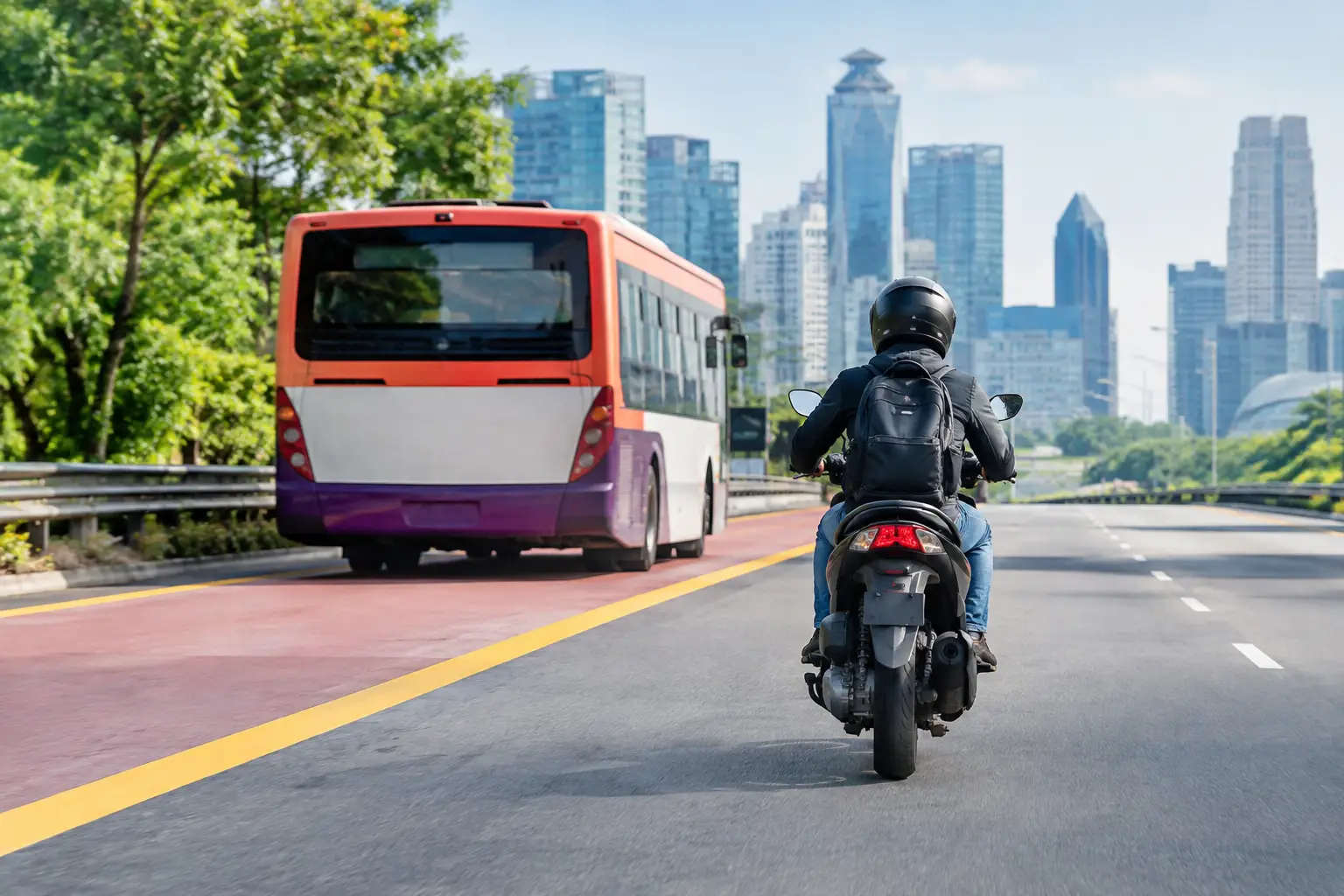
Can Motorcycles Use Bus Lanes in Singapore?
A slow-moving line of cars is building ahead, the bus lane beside you is clear, and you need to make a quick decision. Can motorcycles use bus lanes in Singapore? Yes. Motorcycles are generally allowed to use Singapore bus lanes, including while the bus lane is in operation. But that permission does not make the lane a fast lane, and riding it carelessly can put you directly in the path of buses, taxis, cyclists, and turning vehicles.
For daily commuters, bus lanes can make city riding more practical. The key is knowing the operating hours, reading the road markings, and using the space with the same awareness you would bring to a busy expressway merge.
Can Motorcycles Use Bus Lanes During Operating Hours?
Yes. In Singapore, motorcycles may use bus lanes during their stated operating hours. They share this access with public buses, taxis, bicycles, and certain authorized vehicles.
That said, the lane exists to keep buses moving reliably. As a rider, your goal should not be to block a bus, race through traffic, or treat the lane as an empty strip of road. Use it to travel smoothly and safely, while staying alert to vehicles that need to enter or exit it.
The rule applies to marked bus lanes, but road signs always come first. If there is a temporary restriction, lane closure, roadworks direction, or a sign specifically limiting access, follow the sign on the ground rather than relying on the usual rule.
Know the Bus Lane Hours Before You Merge
Singapore has standard bus lanes and full-day bus lanes. Their operating times are shown on roadside signs, so take a second to read them, especially on an unfamiliar route.
Standard bus lanes commonly operate Monday through Friday from 7:30 a.m. to 9:30 a.m. and from 5:00 p.m. to 8:00 p.m. On Saturdays, they commonly operate from 7:30 a.m. to 9:30 a.m. Full-day bus lanes generally operate from 7:30 a.m. to 11:00 p.m. from Monday through Saturday. Public holiday arrangements may differ, so check the sign rather than assuming the same schedule applies everywhere.
For motorcyclists, the practical point is simple: you are permitted to ride in the bus lane both during and outside those periods, unless local signs say otherwise. The operating hours matter most to cars and other vehicles that are not authorized to use the lane.
Read the Markings, Not Just the Traffic
A bus lane is usually identified by a continuous red line along the road and bus-lane signs at the roadside. It may begin after a junction, end before a bus stop, or continue through a stretch where vehicles are frequently turning left.
Do not assume that every leftmost lane is a bus lane or that every red-marked section has identical rules. Road layouts change quickly around central business districts, interchanges, schools, and construction zones. Keep scanning ahead for signs, lane arrows, bus-stop markings, and temporary barriers.
How to Ride Safely in a Bus Lane
The bus lane can reduce stop-start traffic, but it concentrates several risks in one narrow corridor. Buses are large, stop often, and need room to pull in and out. Taxis may move toward the curb with little warning to pick up or drop off passengers. Cyclists can be slower than traffic, while pedestrians may step out from between parked or stopped vehicles.
Give yourself more following distance than you think you need when riding behind a bus. You cannot see past it, and it can brake hard for a stop, a pedestrian, or traffic ahead. If you choose to pass, do not squeeze between the bus and the curb or rely on a tiny gap near a bus stop.
Watch for these common situations:
- A bus signaling out from a bus stop and needing space to merge back into traffic.
- A taxi moving left toward the curb, often after a late signal or sudden passenger request.
- A car cutting across the bus lane to make a left turn or enter a side road.
- A passenger opening a door from a stopped taxi or private-hire vehicle.
- Wet paint, drain covers, oil patches, and pooled water near the curb.
The safest riding position is usually one that keeps you visible in mirrors and gives you an escape route. Avoid sitting beside a bus for long periods, especially near junctions. Either stay behind with a safe buffer or pass decisively when there is enough room and clear visibility.
Bus Stops Need Extra Patience
Most bus-lane close calls happen near bus stops, not on a clear straight stretch. A bus may pull in sharply, then pull out after only a short stop. Riders approaching from behind can be hidden in its blind spot, while riders passing on the right can meet a car drifting left toward the bus lane.
Slow down as you approach a stopping bus. Look for its indicators, brake lights, pedestrians near the curb, and vehicles in the next lane that may turn across your path. Do not blast through a bus stop area simply because the lane ahead appears open.
If traffic is heavy, let the bus complete its movement before continuing. Giving up a few seconds is far cheaper than dealing with a crash, repairs, towing, medical bills, or time off the road.
Do Not Confuse Access With Priority
Motorcycles are allowed in the lane, but buses still need to perform their service. A rider who camps beside a bus stop, blocks a bus from pulling out, or forces a bus driver to brake is creating a problem for everyone behind them.
Ride predictably. Maintain a sensible speed for traffic conditions, signal early before leaving the lane, and do not weave from the bus lane across several lanes at once. If you need to turn right soon, move across gradually and only when the adjacent lane is clear.
This matters even more during rain or at night. Road markings can be harder to see, spray from buses can reduce visibility, and the curbside surface may be slick. Increase your following distance and make smoother throttle, brake, and steering inputs.
What P-Plate Riders Should Keep in Mind
For newer riders, a bus lane can feel easier because it may be less congested than the general lanes. That does not automatically make it lower risk. The lane demands good observation skills, controlled speed, and confidence around larger vehicles.
If you are still building experience, practice on familiar roads outside peak hours. Get comfortable judging a bus’s stopping distance and recognizing when a taxi is likely to pull over. Stay patient behind a bus when visibility is poor instead of trying to force an overtake.
A well-maintained motorcycle also makes a real difference in city traffic. Responsive brakes, properly inflated tires, working lights, and mirrors adjusted for your riding position are basic safety essentials. Whether you own your bike or rent one, take a quick walk-around before heading out.
Quick Questions From Singapore Riders
Can a motorcycle use a full-day bus lane?
Yes, motorcycles are generally permitted to use full-day bus lanes as well as standard bus lanes. Check the signs at that specific location for any exceptions or temporary restrictions.
Can I overtake a bus in a bus lane?
Only do so when there is enough space, clear sightlines, and a safe route around the bus. Never squeeze between a bus and the curb, and take extra care near bus stops and junctions.
Can I ride quickly because the bus lane is clear?
No. A clear lane can change in seconds when a bus pulls out, a taxi stops, or a car turns left across it. Ride to the road conditions, not the empty space in front of you.
For riders who need practical transport without the long-term cost of ownership, Vroom Leasing keeps maintained motorcycles available across license classes, backed by roadside support when the unexpected happens. Wherever your commute takes you, use the bus lane as a useful option, not a shortcut that replaces good judgment.