



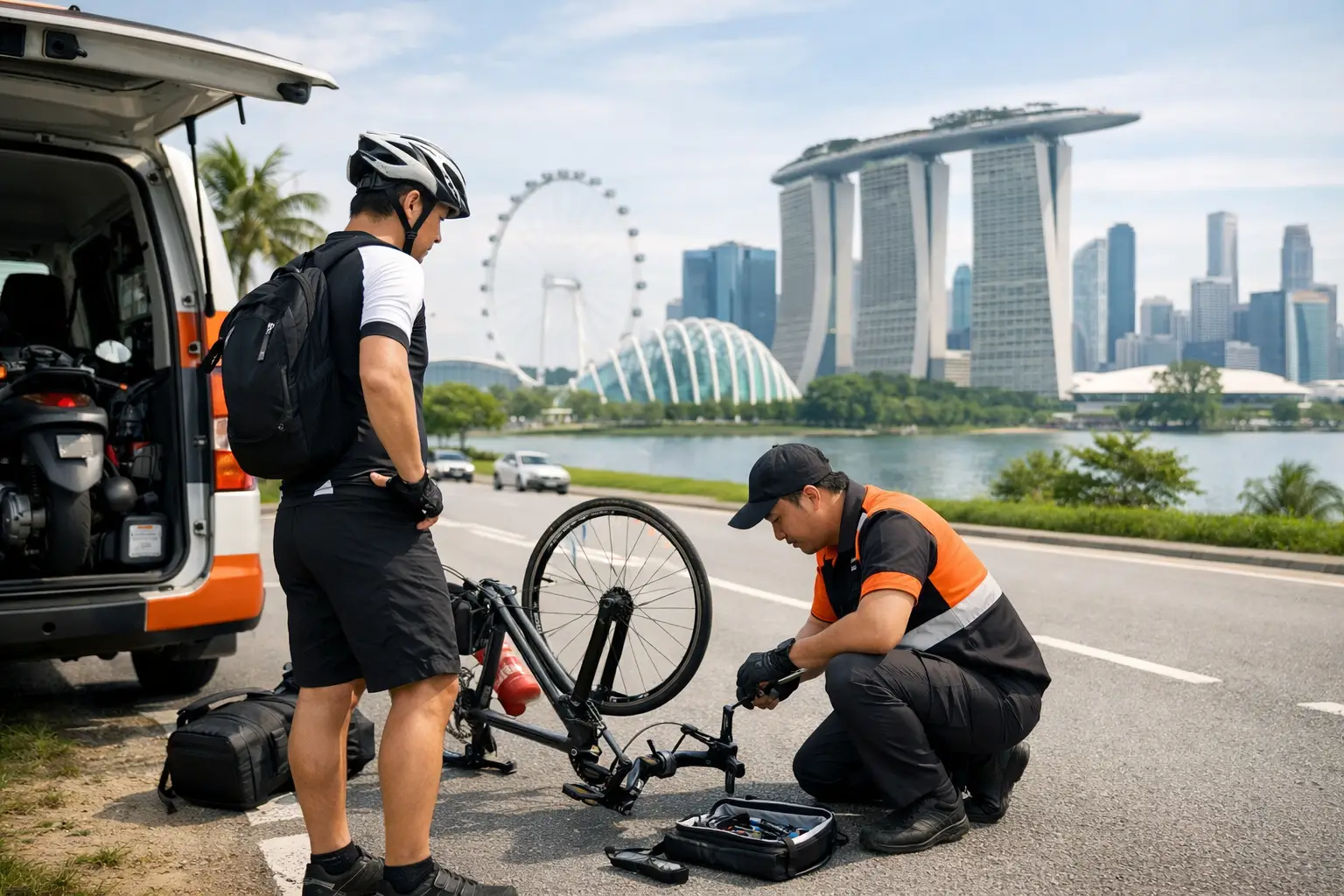
How Roadside Bike Assistance Works in Singapore
A motorcycle breakdown can turn a normal commute into a stressful roadside stop in minutes. Knowing how roadside bike assistance works means you can act quickly, protect yourself from traffic, and get the right help without guessing whether to repair, tow, or leave your bike behind.
For riders in Singapore, the process is usually straightforward: get to a safe position, contact a towing or roadside support provider, share accurate details, and wait for the technician or tow truck to arrive. What happens next depends on the fault, where you are, and whether the bike can be made safe to ride.
How roadside bike assistance works from first call to recovery
Roadside assistance is designed to solve a problem at the roadside when possible and arrange safe recovery when it is not. It is not always a full repair service on the spot. The first goal is to prevent a small issue from becoming a safety risk or further damage to the motorcycle.
When you call for assistance, the support team will normally ask for your location, motorcycle model, license plate number, and a brief description of the issue. Be as specific as you can. Say whether the bike will not start, has a flat tire, is overheating, has been in an accident, is leaking fluid, or has a damaged chain. This helps the dispatcher send the right vehicle and equipment.
Your exact location matters. Share the road name, nearby landmark, exit number, car park level, or a pin from your phone. If you are on an expressway or in a location where stopping is unsafe, tell the team that immediately. It can affect how the recovery is handled and how quickly a tow vehicle can reach you.
Once the request is logged, the provider dispatches a technician, motorcycle towing vehicle, or recovery truck. You should receive an estimated arrival time, although traffic, weather, and the location of the nearest available driver can affect it. A reliable provider will keep communication clear instead of leaving you unsure about what is happening.
What to do while waiting for help
Your safety comes before the bike. If the motorcycle can be moved without putting you at risk, guide it away from moving traffic to a shoulder, designated stopping area, parking lot, or other safe location. Turn on your hazard lights if your bike has them, and wear a reflective vest if you carry one.
Do not stand between your motorcycle and traffic. On busy roads, stay behind barriers where possible and remain alert to surrounding vehicles. If the bike has stalled in an unsafe lane, do not attempt a complicated repair there. A loose battery terminal may be a simple fix, but it is not worth taking risks beside fast-moving traffic.
Take a few photos before recovery, especially after an accident or if you can see visible damage. Photos can help document the bike’s condition and make it easier to explain the problem to a workshop, rental provider, or insurer. Remove personal items from storage compartments and keep your keys, identification, and rental documents with you.
What roadside teams can usually help with
The assistance available depends on the provider, the motorcycle’s condition, and the tools carried by the recovery team. Some faults can be checked or resolved quickly. Others need a workshop because the diagnosis requires more time, parts, or specialized equipment.
Common roadside issues include a weak or flat battery, a loose connection, an empty fuel tank, a punctured tire, a snapped or badly adjusted chain, overheating, or a bike that will not start. A technician may inspect the battery, fuses, wiring, tire condition, fuel supply, and visible mechanical components before deciding whether the bike can continue safely.
A jump-start can get some motorcycles running, but it is not always the final answer. If the charging system is faulty, the battery may go flat again shortly after you ride away. Similarly, an emergency tire repair may only be suitable for certain punctures and tire types. If the tire sidewall is damaged or the wheel is unsafe, towing is the smarter choice.
Roadside assistance should never encourage you to ride a motorcycle with compromised brakes, steering, tires, lights, fuel lines, or major engine issues. Saving a towing fee is not worth a crash, a larger repair bill, or getting stranded again a few miles later.
When towing is the right call
Towing is normally recommended when the motorcycle cannot be repaired safely at the roadside, has been involved in an accident, or shows signs of a serious mechanical problem. Examples include a seized engine, major oil leak, damaged wheel, broken control lever, electrical failure, collision damage, or a tire that cannot hold air.
A proper motorcycle tow uses equipment that keeps the bike stable and secured during transport. The front wheel, frame, and tie-down points must be handled correctly to avoid additional damage. This is different from moving a car, which is why a motorcycle-specific towing service matters.
Before the bike is loaded, confirm the destination. You may choose a trusted workshop, your home, a designated service center, or the rental company’s location if you are riding a leased or rented motorcycle. Ask whether the quoted price includes loading, towing distance, expressway charges, late-night service, or additional stops. Clear pricing avoids surprises when you are already dealing with a breakdown.
Roadside assistance for rental motorcycles
If you are renting a bike, contact the rental provider as soon as it is safe to do so. Do not authorize major repairs or arrange outside towing without checking the rental terms unless there is an immediate safety emergency. The provider may have a preferred recovery process, a workshop arrangement, or instructions that protect both you and the motorcycle.
Give an honest description of what happened. If the bike was dropped, hit a curb, overheated, or began making unusual noises before it stopped, say so. Accurate information helps the support team prepare and helps avoid delays once the bike reaches the workshop.
For riders using Vroom Leasing, 24/7 roadside support provides a practical backup when a rental bike develops a problem away from the collection point. The key is to report the issue promptly, follow the support team’s instructions, and avoid attempting repairs that could make the situation worse.
How much does roadside motorcycle help cost?
The price depends on the service required. A simple callout, jump-start, fuel delivery, tire-related check, or short-distance tow may cost less than a long recovery from an expressway or remote location. After-hours requests, accident recovery, parking restrictions, and the final towing destination can also affect the price.
Some riders have roadside coverage through insurance, a rental agreement, a workshop package, or a membership plan. Coverage may include towing only up to a distance limit, so check the details before assuming every cost is covered. If you are paying directly, ask for the estimated rate before dispatch and confirm any extra charges that may apply.
The lowest advertised rate is not always the best value. A cheap tow that arrives late, communicates poorly, or transports the motorcycle incorrectly can create more trouble than it saves. Fast response, transparent pricing, and proper bike handling are what matter when you are stranded.
Preventing the next breakdown
Roadside assistance is there for unexpected problems, but basic checks reduce the chance that you will need it. Check tire pressure regularly, inspect the chain, watch for fluid leaks, and pay attention to changes in starting behavior. A bike that cranks slowly, loses power, pulls to one side, or shows warning lights is asking for attention before it becomes a roadside issue.
Keep your fuel level sensible, especially before longer rides. Carry a phone charger or power bank, your provider’s support number, and basic items such as a raincoat and reflective gear. If your motorcycle has a puncture repair kit or compact inflator, learn how to use it before the day you actually need it.
Regular servicing also matters. Well-maintained motorcycles are less likely to fail without warning, and small faults are usually cheaper to fix in a workshop than during an emergency tow.
The best roadside decision is often a calm one: move to safety, share accurate information, and let trained support handle anything that affects the bike’s ability to stop, steer, or stay stable. Your commute can be replaced. Your safety cannot.
How to Return Rental Motorcycles Without Hassle - Vroom Leasing says:
September 1, 2026[…] dependable rental company should tell you what to do next, whether that means roadside assistance, towing, repair support, or a revised return arrangement. Vroom Leasing supports riders with 24/7 […]
Roadside Assistance Versus Private Towing - Vroom Leasing says:
September 5, 2026[…] Roadside assistance is designed to get a rider back on the road when the issue is minor and repairable on the spot. Depending on the provider and the situation, that may mean checking a flat battery, providing a jump-start, helping with a flat tire, inspecting a loose connection, or carrying out basic troubleshooting. […]
Where to Park Motorcycles in Singapore Safely - Vroom Leasing says:
September 11, 2026[…] your motorcycle breaks down and cannot be moved safely, do not leave it in a hazardous position. Move it only if you can do so […]