



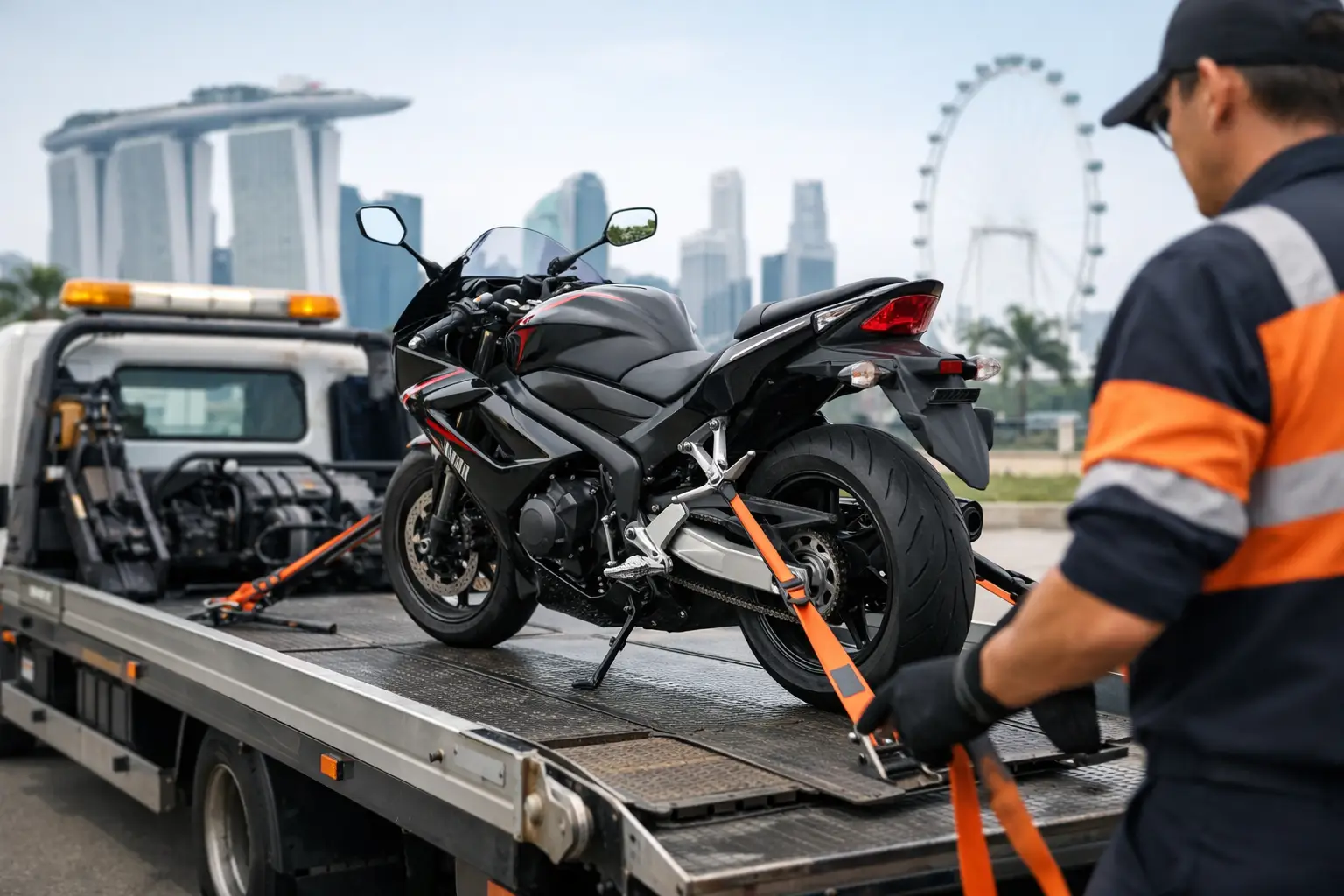
Motorcycle Towing Costs in Singapore Explained
A breakdown on the expressway is stressful enough without wondering whether the recovery bill will hurt more than the repair. Motorcycle towing costs in Singapore can vary widely based on where you are, where the bike needs to go, the time of day, and whether the motorcycle can be moved safely. Knowing what drives the price helps you make a quick, informed call when your bike will not start, has a puncture, or cannot be ridden legally.
For most riders, the cheapest tow is not always the best tow. A low quoted fee can become expensive if it excludes mileage, loading help, ERP charges, late-night service, or delivery to your preferred workshop. The right service should give you a clear price, handle your motorcycle carefully, and get you and your bike out of a risky roadside situation without unnecessary delays.
What affects motorcycle towing costs?
The starting point is usually a call-out fee. This covers dispatching a recovery vehicle, traveling to your location, and loading the motorcycle. From there, the final cost may rise according to distance, access conditions, and the work required to secure the bike.
A short tow from a neighborhood car park to a nearby workshop will generally cost less than a recovery from Tuas, Changi, or an expressway to a workshop on the other side of Singapore. Distance matters even in a compact city because the towing team has to account for travel time, vehicle fuel, route charges, and the return journey.
The motorcycle’s condition matters too. A bike that rolls freely, has intact wheels, and can be pushed to the loading point is straightforward. A motorcycle with a locked wheel, crash damage, a broken chain, or a flat tire may take more time and equipment to load. If it is parked in a basement with height restrictions, on a narrow lane, or in a location that a towing truck cannot reach, additional handling may be needed.
Timing can also affect motorcycle towing costs. Late-night, early-morning, public holiday, and urgent roadside requests may carry a premium. That does not mean you should wait until business hours if your bike is stranded in an unsafe place. It means you should ask for the full charge upfront, including any after-hours surcharge, before confirming the job.
Typical situations and what they can cost
There is no single towing price that applies to every rider. A transparent provider should quote based on the actual pickup and drop-off points instead of promising one flat number for every situation.
A simple local tow is often the most affordable scenario: the bike is accessible, it can roll, and the destination is nearby. An islandwide tow will usually cost more because mileage and travel time increase. Emergency expressway recovery may be priced differently again, particularly if the team must respond quickly or work around a hazardous roadside location.
The biggest price jump often comes from complications, not just distance. For example, a bike involved in an accident may need careful securing to prevent further damage. A motorcycle that cannot be rolled may require extra manpower. If you need the bike delivered to a specific workshop, your home, or a storage location rather than the nearest repair facility, the longer route can change the quote.
Be cautious with prices that sound unusually cheap without details. Ask whether the quote includes loading, transport, unloading, tolls or road charges where applicable, and any fees for difficult access. A proper quote should tell you what is included so there is no argument when the vehicle arrives.
How to get an accurate towing quote faster
When your bike stops, take a moment to gather the details a towing provider needs. Clear information reduces back-and-forth messages and helps the team send the right vehicle.
Share your exact pickup location, including the car park level, building name, nearby landmark, or expressway direction. Give the motorcycle make and model, and explain whether it can roll. If there is visible accident damage, a wheel lock, a missing key, or a flat tire, say so immediately. You should also provide the exact drop-off location and mention whether you have a preferred workshop.
Photos are useful when access is difficult or the motorcycle is damaged. A quick picture of the bike and its surroundings can help the operator assess whether a standard recovery vehicle can reach it. This is especially helpful in multi-story parking garages, loading bays, and tight residential areas.
Before you confirm, ask for the total estimated price rather than only the base call-out fee. Confirm whether the rate may change due to waiting time, extra distance, overnight recovery, or special loading requirements. If the final price depends on an inspection at the scene, ask what situations would cause an increase.
Do not ride a bike that is unsafe to move
Trying to save on a tow can lead to a much larger repair bill. If the engine is overheating, the chain has snapped, the brakes feel weak, oil is leaking, the tire is severely damaged, or the bike has been in a collision, riding on may put you and other road users at risk.
A tow is also the sensible choice when a motorcycle will not start and you are stuck in an unsafe location. Pushing a bike along a busy road or attempting roadside repairs without proper tools creates risks that are not worth a small saving. Move yourself to a safe spot first, switch on your hazard lights if appropriate, and arrange recovery.
For P-plate riders and newer commuters, it is easy to panic when a warning light appears or the bike suddenly loses power. You do not need to diagnose every mechanical issue at the roadside. Describe the symptoms clearly, arrange assistance, and let a workshop inspect the problem properly.
Ways to avoid unnecessary towing expenses
Not every breakdown can be prevented, but regular checks make a difference. Keeping up with servicing helps catch worn tires, weak batteries, chain issues, leaking fluids, and brake wear before they become a roadside problem. A well-maintained motorcycle is less likely to leave you stranded during a work commute or weekend ride.
It also helps to keep your fuel level under control. Running out of fuel, especially on a longer ride or unfamiliar route, is an avoidable reason for a recovery call. Before heading out, check your tire condition, lights, fuel, and any signs of fluid leaks. These small habits take minutes and can save a costly interruption.
Store the contact details of a dependable towing provider in your phone before you need one. When a breakdown happens, you want a fast response and clear communication, not a rushed search while standing beside the road. Vroom Leasing supports riders with motorcycle towing and roadside assistance focused on quick, practical help when plans change unexpectedly.
What a reliable towing service should provide
Price matters, but careful handling matters just as much. Motorcycles need to be secured properly during transport to avoid scratches, bent levers, suspension stress, or further damage to a compromised bike. The provider should use suitable equipment and take the time to load the motorcycle safely.
Look for clear communication from the first call. You should know the expected response process, what information is needed, where the motorcycle will be sent, and the estimated charge. A responsive team will not make a breakdown feel convenient, but it can make the next step far less frustrating.
If you are using a rental motorcycle, contact the rental provider as soon as a problem occurs. They may have specific roadside support procedures, an approved workshop, or instructions for securing the bike. Do not authorize major repairs or leave the motorcycle unattended without notifying them.
A breakdown is never part of the ride plan. Still, a clear towing quote, safe recovery, and a reputable workshop turn a bad stop into a manageable delay. Keep your bike maintained, save a trusted support number, and choose a towing team that treats your motorcycle with the same care you do.