



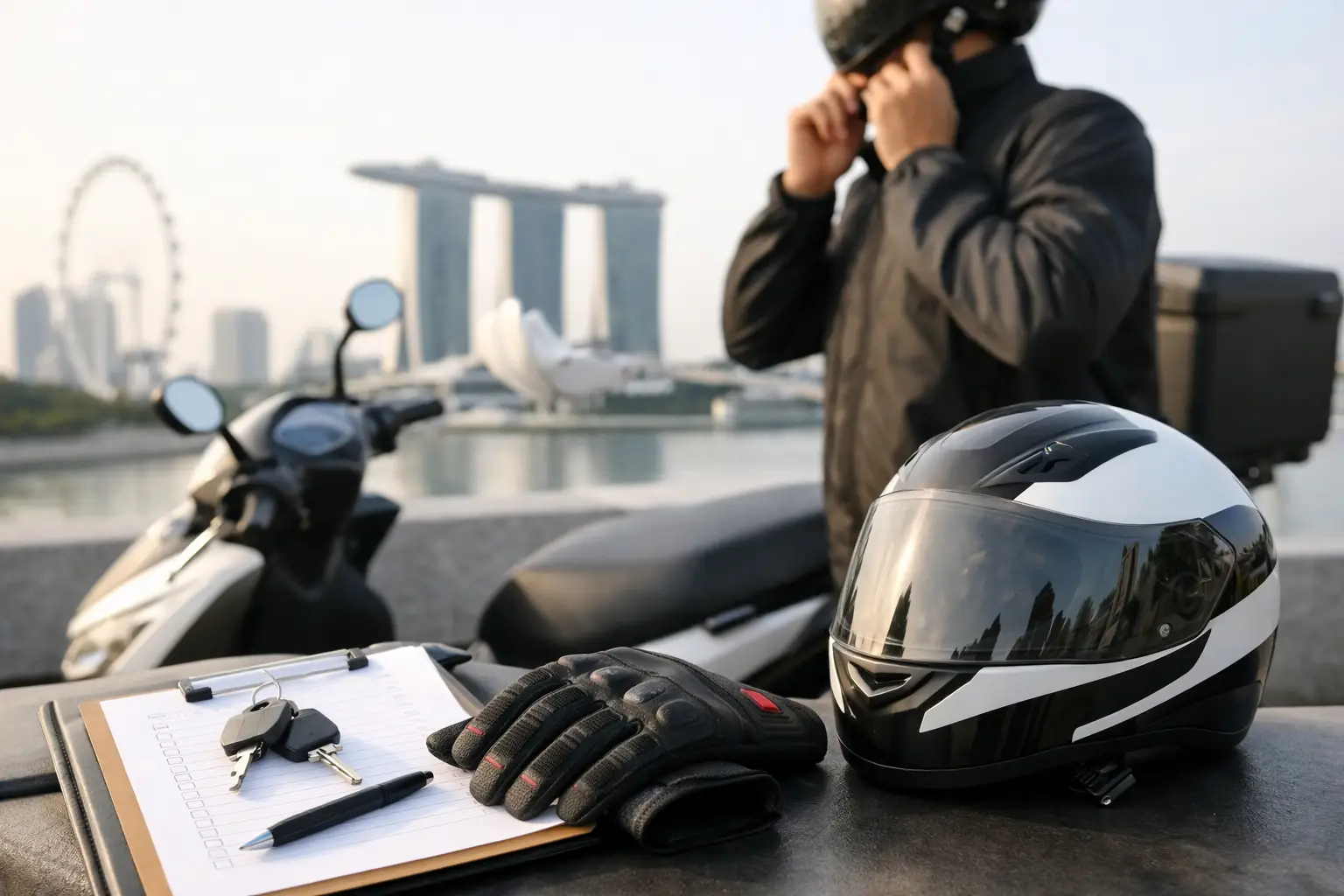
New Rider Rental Checklist: Ride Ready in Singapore
Your first rental should feel exciting, not like a last-minute test of whether you remembered every document, charge, and safety check. This new rider rental checklist is built for Singapore riders who want a practical way to book, collect, and return a motorcycle without avoidable stress.
A rental gives you flexibility without the cost and commitment of owning a bike. But the best experience starts before you turn the key. Take a few minutes to prepare properly, and you can focus on what matters: getting to work, running errands, or enjoying your ride with confidence.
Before You Book Your Rental Bike
Start with your license class. Your rental motorcycle must match the class of license you hold. Class 2B riders should choose an eligible Class 2B bike, while Class 2A and Class 2 riders can select from the appropriate higher-capacity categories. Do not book based only on looks, price, or what a friend recommends. A bike that suits your license, riding experience, and daily route is the smarter choice.
Newer riders often do better with a familiar, manageable motorcycle rather than a heavier or more powerful option. Think about the roads you will use most. A daily commute with stop-and-go traffic, expressway stretches, and parking at your workplace calls for a bike that feels easy to balance and maneuver at low speed. A weekend ride may leave more room for personal preference, but comfort still matters.
Before confirming the booking, make sure you have your valid riding license, identification, and any other documents requested by the rental provider ready. Check the pickup time, return time, deposit requirements, payment terms, and whether delivery or self-collection works better for your schedule. A lower daily rate is helpful, but it is only one part of the cost. Understand what is included, what may be chargeable, and what happens if you need to extend the rental.
Match the Rental Period to Your Real Schedule
Be realistic about how long you need the bike. Booking for too short a period can create pressure if your plans change, especially when you rely on the motorcycle for work or school. On the other hand, a longer rental may offer better value if you know you will be riding regularly.
Ask about the process for extensions before you need one. Availability can change quickly, particularly for popular models and during busy periods. A clear extension process gives you more control when life does not follow the original plan.
Your New Rider Rental Checklist at Collection
Collection is not just a handover. It is your chance to understand the motorcycle and record its condition before your first ride. A maintained rental bike should be ready for the road, but you should still carry out a calm, visible check with the staff member whenever possible.
Walk around the motorcycle and look for existing scratches, cracked panels, loose parts, or other cosmetic marks. Take clear photos or video in good lighting, including both sides, the front, rear, wheels, mirrors, and any areas that already show wear. This is not about expecting problems. It is about making sure everyone has the same record from the start.
Then check the practical controls. Confirm that the horn, headlights, brake lights, turn signals, and mirrors work. Look at the tire condition and make sure the tires appear properly inflated. Test the front and rear brakes while stationary, and ask where the fuel cap, seat release, side stand, and main stand are located if you are not familiar with the model.
You should also know where the vehicle documents are kept and what to do if there is an accident, flat tire, warning light, or mechanical issue. Save the rental provider’s support number in your phone before leaving. Fast assistance matters far more when you are stranded at night, caught in rain, or running late for work.
Set Up for a Safe First Ride
A motorcycle can be mechanically ready while the rider is not. Do not collect a rental in slippers, loose clothing, or a helmet that does not fit correctly. Singapore’s heat can make full riding gear feel inconvenient, but your skin and hands are the first things exposed in a fall.
At a minimum, wear a properly secured helmet, covered shoes, and clothing that covers your arms and legs. Gloves and a riding jacket add useful protection, especially if you ride regularly or travel on expressways. For wet-weather riding, bring rain gear that you can put on quickly instead of trying to rush through a downpour.
Before entering traffic, take a few minutes in a safe area to get used to the bike. Find the signal switch, horn, high beam, brake lever feel, rear brake pedal, and fuel gauge. If it is an automatic scooter, get a feel for throttle response and braking balance. If it is a manual motorcycle, check the clutch bite point and gear pattern before you reach a busy junction.
This short familiarization period is especially valuable if you usually ride a different model. Every bike has its own weight distribution, turning radius, brake feel, and acceleration. Confidence should come from control, not from assuming every motorcycle rides the same.
Budget Beyond the Daily Rental Rate
Affordable rentals make two-wheel mobility easier, but your actual riding budget includes more than the advertised daily price. Plan for fuel, parking, Electronic Road Pricing charges where applicable, and any cost related to late returns or damage outside the rental terms.
Fuel is usually straightforward, but check the fuel level at collection and understand the return requirement. Returning the bike with less fuel than agreed can lead to extra charges and wastes time for the next rider. Keep your fuel receipt if it helps you track expenses or confirm a top-up.
Parking deserves attention too. Motorcycle lots are generally more affordable than car parking, but rates and payment methods vary by location. If you commute to an unfamiliar office, mall, or residential area, check where motorcycles can park before you arrive. Riding around while distracted by navigation and parking stress is not a good start to any trip.
The cheapest option is not always the best value. A slightly higher rental rate may be worth it if it includes a well-maintained bike, responsive support, and a clear process when something goes wrong. Vroom Leasing focuses on that practical balance: accessible rental options backed by maintenance and roadside assistance when riders need help.
Ride Like a Renter, Not a Test Rider
Treat a rental bike with the same care you would give your own future motorcycle. Avoid aggressive acceleration, hard braking, curb hopping, and unnecessary modifications. Besides increasing risk, these habits can lead to damage charges and leave the next rider with a poorer experience.
For P-plate riders, the key is not proving that you can keep up with faster traffic. It is making predictable decisions. Leave more following distance, signal early, check blind spots carefully, and give yourself extra time at junctions. Singapore traffic moves quickly, and rain can turn familiar roads slippery within minutes.
If you feel tired, distracted, or unwell, stop before it affects your riding. A rental makes transportation convenient, but it does not remove the responsibility of deciding when not to ride. It is always better to take a short break, wait out heavy rain, or choose another option than force a ride when your focus is not there.
What to Do If Something Goes Wrong
Breakdowns and punctures are inconvenient, but they do not have to become a panic situation. Get yourself and the motorcycle to a safer location if possible. Turn on hazard lights where appropriate, stay alert to surrounding traffic, and contact the rental provider’s support team for instructions.
Do not attempt repairs you are not qualified to make, especially by the roadside. A quick fix can turn a minor issue into a bigger mechanical problem. If there is an accident, prioritize safety, follow the required reporting steps, document the scene, and inform the rental company promptly.
The same approach applies to warning lights or an unfamiliar sound. Stop and ask when in doubt. A dependable rental provider would rather assess an early concern than have you continue riding with a developing issue.
Make the Return Just as Smooth
On return day, allow extra time. Last-minute traffic, fuel stops, rain, and parking delays are common reasons riders arrive late. Check the fuel requirement, remove all personal belongings from the seat compartment, and do one final walk-around with the same care you used at collection.
Take updated photos of the bike’s condition, note the mileage if requested, and make sure you have returned keys, documents, and any supplied accessories. If you want to rent again, use the experience to refine your next booking. You may discover that a different bike size, rental duration, or pickup arrangement suits your routine better.
A good first rental is not about having a perfect ride. It is about knowing your bike, riding within your limits, and having reliable support in place so every trip starts with a clear head.