



Scooter Versus Manual Motorcycles: Which Fits You?
A stop-and-go commute can make a motorcycle feel like the smartest transport choice in Singapore – until you are deciding between a twist-and-go scooter and a manual bike with a clutch. The scooter versus manual motorcycles question is less about which one is “better” and more about what your daily ride actually demands: traffic, parking, confidence level, passenger needs, and the kind of control you want from the bike.
For a short rental, a workweek commute, or a weekend plan, choosing the right type can make every ride easier. Here is the practical difference.
Scooter Versus Manual Motorcycles: The Main Difference
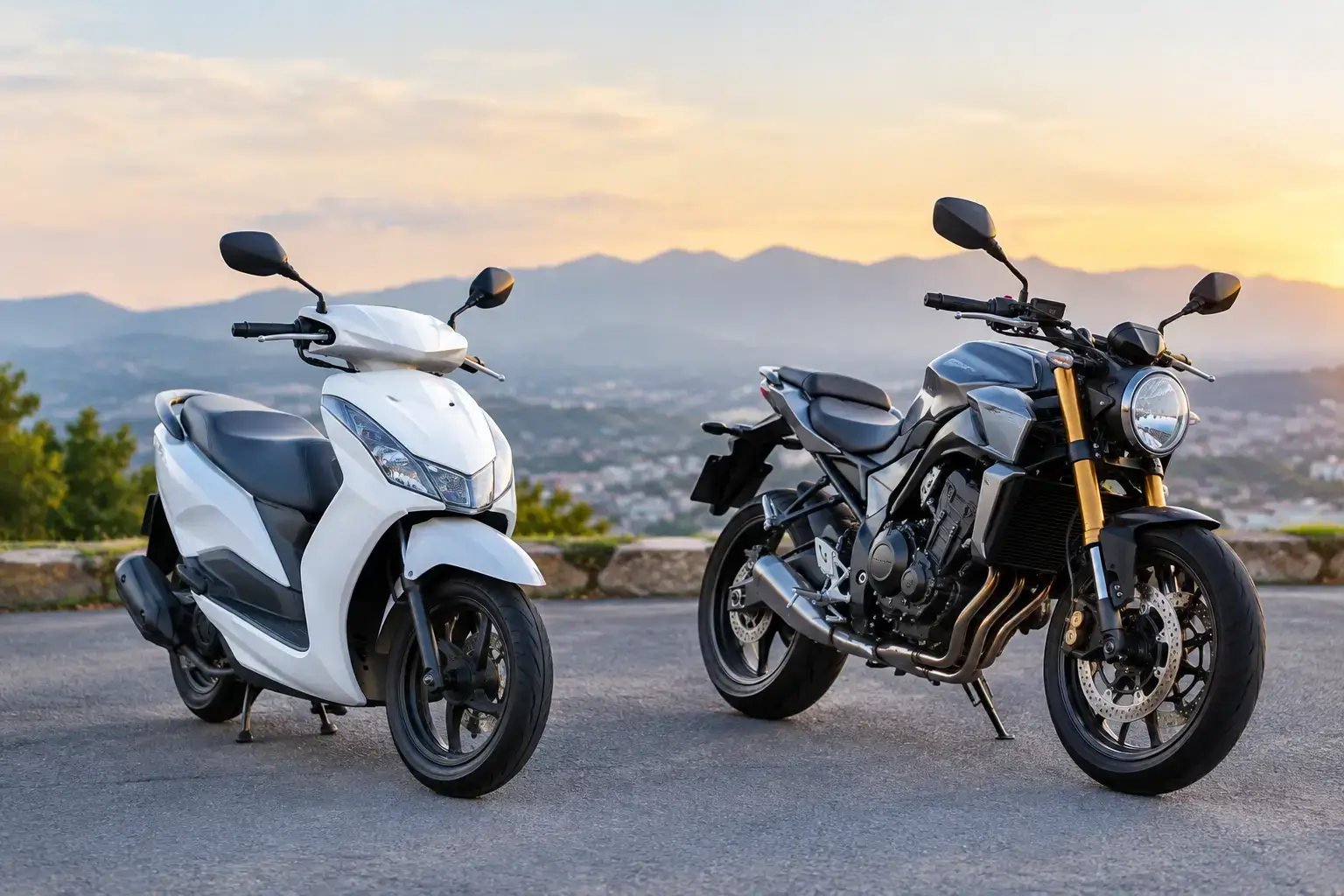
A scooter uses an automatic transmission, usually a CVT system. Twist the throttle and go. There is no clutch lever, no gear shifter, and no need to find neutral at every traffic light. Most scooters also have a step-through frame and under-seat storage, making them particularly convenient for city errands.
A manual motorcycle uses a clutch and gear selector. The rider controls when to change gears, which gives more direct involvement in how the bike accelerates, slows down, and responds on the road. Manual bikes range from lightweight Class 2B commuters to larger Class 2A and Class 2 machines built for stronger performance and longer-distance comfort.
Neither option is automatically right for every rider. A scooter can be the more relaxed choice in dense traffic, while a manual motorcycle may feel more capable when you want stronger acceleration, engine braking, or a more engaging ride.
Why Scooters Work So Well for City Rides
Scooters are built around convenience. If your route includes frequent traffic lights, slow-moving traffic, and quick stops, removing clutch work can reduce fatigue. Newer riders often appreciate being able to keep both hands focused on steering and braking rather than coordinating a clutch and gear changes.
Storage is another major advantage. A scooter’s under-seat compartment can hold small daily essentials, depending on the model. That is useful when you are carrying a rain jacket, gloves, documents, or a few small purchases. A step-through design also makes getting on and off easier, especially if you are wearing office clothes or making multiple stops.
Scooters are usually easy to maneuver at lower speeds. Their automatic transmission gives smooth roll-on acceleration without a missed shift or accidental stall. For P-plate riders who are still building road confidence, that simplicity can free up more attention for lane positioning, mirrors, traffic flow, and safe braking.
That said, automatic does not mean effortless in every situation. Scooters still require proper throttle control, braking technique, and awareness of road surface conditions. Smaller wheels on some models can also feel more affected by potholes, uneven roads, and wet painted markings. Ride within the scooter’s limits, particularly in rain.
A Scooter May Suit You If You Prioritize Convenience
Choose a scooter if you mainly want a practical way to get from point A to point B, do not want to manage a clutch in traffic, and value built-in storage. It is often an excellent match for short urban trips, daily commuting, and riders returning to two wheels after a long break.
Why Riders Choose Manual Motorcycles
Manual motorcycles give you more involvement and more options. Selecting a gear lets you keep the engine in the power range you want, which can be useful when merging, overtaking safely, or carrying a passenger. Many riders also prefer the planted, familiar feel of a conventional motorcycle frame, fuel tank, and larger wheels.
The clutch is not just an extra task. Once you are comfortable with it, it gives precise low-speed control. This can be helpful in tight car parks, slow traffic, and controlled maneuvering. Downshifting also creates engine braking, allowing you to manage speed with more control before applying the brakes.
For riders who enjoy the mechanical side of motorcycling, a manual bike is usually more rewarding. There is a rhythm to choosing gears correctly, matching engine speed, and reading the road ahead. It turns a routine commute into a more active ride.
The trade-off is that a manual motorcycle asks more from the rider. Repeated clutch use can be tiring during long traffic jams, and a rider who is rusty may stall or select the wrong gear at first. It is normal to need a few minutes to readjust after switching models, especially if the clutch bite point or gear lever position feels different from your usual bike.
A Manual Motorcycle May Suit You If You Want More Control
Choose a manual motorcycle if you already ride confidently with a clutch, enjoy being more connected to the machine, or need performance that feels stronger at higher road speeds. It is also a good option for riders moving up through Singapore’s license classes and wanting a bike that matches their experience and legal license entitlement.
Cost, Fuel, and Rental Value
The cheapest option is not always the best value if it does not fit your route. A scooter may save you time and effort for short, frequent trips, while a manual bike may be worth the difference if you are traveling farther, riding with a passenger, or simply feel more secure on a conventional motorcycle.
Fuel use depends heavily on the engine size, rider behavior, traffic, and model condition. It is not safe to assume every scooter uses less fuel than every manual motorcycle. A small Class 2B manual commuter can be highly fuel-efficient, while a larger scooter can use more. Compare the specific bike, not just the transmission type.
When renting, factor in what you receive beyond the daily rate. A well-maintained bike, clear collection process, responsive support, and roadside assistance matter when you rely on the motorcycle for work or appointments. A low advertised price loses its appeal quickly if a maintenance issue disrupts your day.
At Vroom Leasing, riders can choose from different motorcycle categories based on their license class and ride needs, rather than forcing every commute into one type of bike. That flexibility is useful when you need a simple commuter this month and something different for a later trip.
Comfort, Passengers, and Carrying Your Gear
Comfort comes down to the individual model, but there are predictable differences. Scooters often offer relaxed leg positioning and easy access to storage. They can be comfortable for urban rides, although taller riders should check whether the footboard and handlebar position leave enough room.
Manual motorcycles often provide more opportunities to change body position, especially on longer rides. Depending on the model, the seat may be firmer or more supportive than a scooter seat. A manual bike can also feel steadier at speed because of its wheel size, weight distribution, and chassis design, though this varies widely.
If you carry a passenger regularly, do not choose based on appearance alone. Check the passenger seat size, footpeg position, rear grab rails, and how the bike responds with added weight. The same applies if you carry a backpack, work gear, or delivery items. A scooter’s storage is useful, but it is not unlimited. A motorcycle with a proper top box may suit your load better.
How to Make the Right Choice Before Booking
Start with your real route. If you are riding mainly through town, making quick stops, and want the least demanding experience, a scooter is likely the sensible call. If your route includes faster roads, you prefer shifting yourself, or you want a more involved ride, look at manual motorcycles within your license class.
Be honest about your current skill level. A P-plate rider does not need to prove anything by selecting the most powerful or complicated bike available. The better choice is the one you can operate smoothly, park confidently, and handle safely in wet weather and traffic.
Before setting off on any rental, adjust the mirrors, check the brakes and lights, understand where the fuel cap and stand are located, and take a moment to feel the throttle and brake response. On a manual bike, locate the friction zone before entering traffic. On a scooter, get used to the rear brake lever and initial throttle response in a clear area.
The right motorcycle should make your day run better, not add stress to it. Pick the bike that suits your confidence and your route, then give yourself a few calm minutes to get familiar before the road gets busy.