



Motorcycle Rental Deposit Explained for Riders
You have found a bike that fits your license class, your budget, and your daily route. Then you see a refundable deposit at checkout. A motorcycle rental deposit explained properly should not feel like a surprise charge. It is a security amount held while the motorcycle is in your care, with the balance returned after the bike is checked in according to the rental agreement.
For riders in Singapore, a deposit protects both sides of the rental. You get access to a maintained motorcycle without buying one outright, while the rental company has a fair way to manage unpaid rental fees, traffic penalties, damage, or missing items. The key is knowing exactly what is being held, when it is released, and what can affect the final amount.
What Is a Motorcycle Rental Deposit?
A rental deposit is not the same as your rental payment. Your rental payment covers the period you booked the motorcycle for. The deposit is a temporary security hold or upfront amount collected before you collect the bike.
Think of it as responsibility during the rental period. The motorcycle is handed over in working condition, along with any stated accessories or documents. When it comes back on time, in the agreed condition, and with no outstanding charges, the deposit is returned based on the rental provider’s process.
The deposit amount can vary. It may depend on the motorcycle category, model value, rental duration, rider profile, and the provider’s terms. A higher-capacity Class 2 motorcycle may carry different deposit requirements than an entry-level Class 2B commuter bike. This is normal because repair costs, replacement parts, and insurance exposure can differ significantly.
What Does a Motorcycle Rental Deposit Cover?
A deposit is there for legitimate costs that arise during or after the rental. It is not intended to be a vague penalty fund. Before collecting your motorcycle, ask what situations may lead to a deduction and how those deductions are calculated.
Common reasons include late return charges, unpaid rental extensions, traffic fines received during your booking, parking violations, missing keys, missing accessories, and damage beyond normal wear. If the motorcycle needs cleaning because it is returned in an unusually dirty condition, that may also be covered under the rental terms.
Damage is the area riders usually worry about most, and rightly so. A small scratch, a cracked mirror, bent lever, or damaged fairing can be costly depending on the model. The practical question is whether the issue was pre-existing, normal wear, or new damage that occurred while you had the bike. That is why a proper handover inspection matters.
Some costs may not be known immediately at return. For example, a traffic or parking notice can arrive after your rental has ended. A provider may need to keep the deposit temporarily, or deduct the confirmed amount later, according to the agreement. Ask about this upfront so there is no confusion.
Motorcycle Rental Deposit Explained at Handover
The best time to prevent a deposit dispute is before you start the engine. Do not rush through pickup just because you are eager to get on the road.
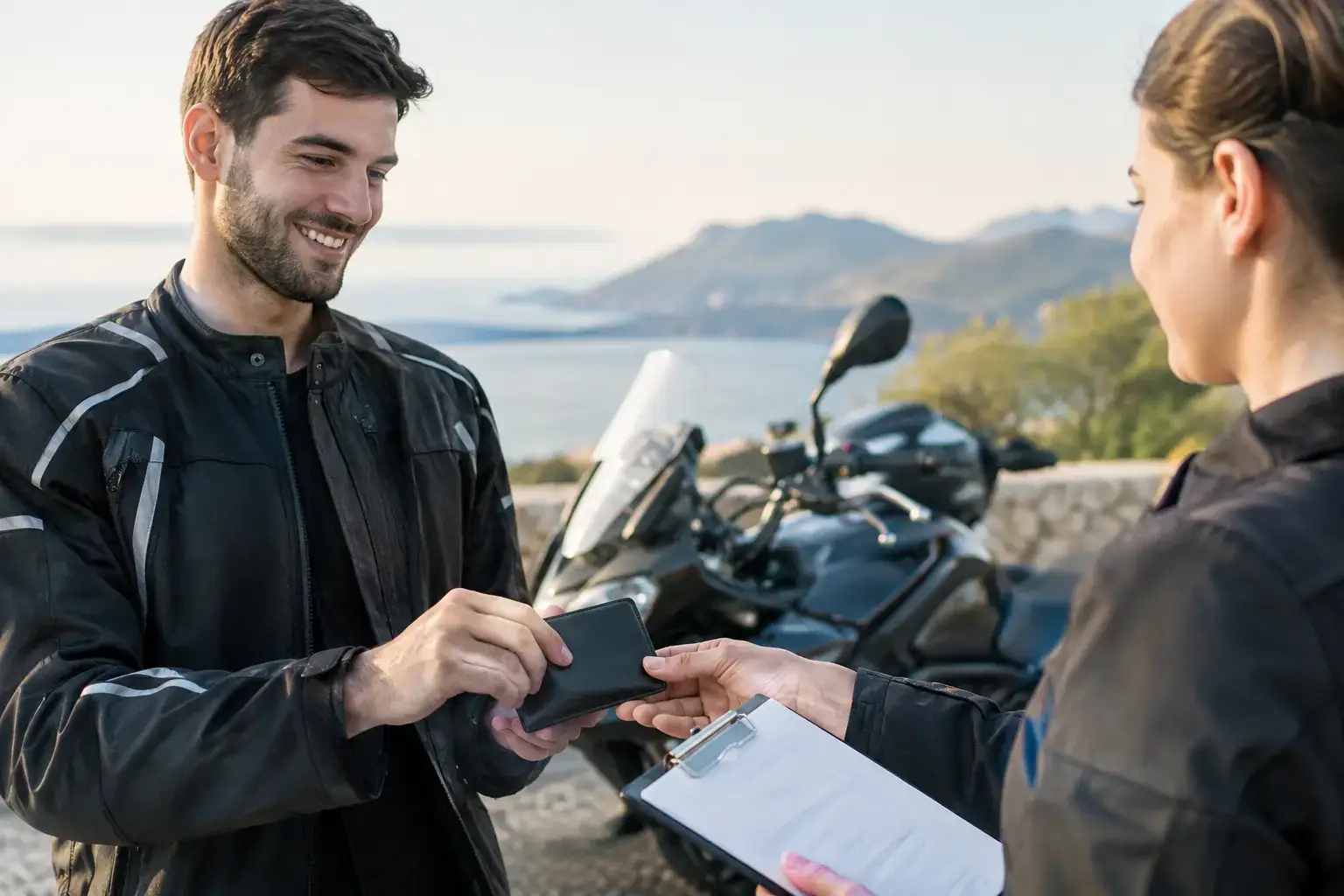
Inspect the motorcycle with the staff member and take clear photos or video of the bike from all sides. Capture existing scratches, scuffs, cracked panels, tire condition, mirrors, levers, seat condition, and the odometer. If there is an existing mark, make sure it is acknowledged before you leave. Good documentation protects you as much as it protects the rental company.
Confirm what you are receiving with the motorcycle. This could include keys, a helmet if provided, a top box, a phone holder, rain gear, or other accessories. Ask how fuel is handled too. Some rentals require the motorcycle to be returned at the same fuel level, while others have a separate fuel policy.
You should also read the rental agreement closely. Focus on the return time, grace period if any, accident reporting steps, authorized rider rules, and breakdown procedure. A low daily rental rate is valuable, but only when you understand the full terms that come with it.
How to Protect Your Deposit While Renting
Most deposit deductions are avoidable with basic planning. Ride within your license class, park carefully, and treat the motorcycle as if it were your own. That sounds simple, but Singapore’s tight parking areas, heavy rain, and stop-and-go traffic can create situations where minor damage happens quickly.
Keep the motorcycle secure whenever it is parked. Do not leave keys, documents, or accessories unattended. Avoid lending the bike to someone else, even if they are licensed, unless the rental agreement specifically allows it. Unauthorized riding can create serious complications if there is an accident or a traffic offense.
If you need more time, contact the rental provider before your return deadline. An approved extension is far easier and usually cheaper than returning late without notice. The same applies if you notice a mechanical issue. Report it promptly rather than attempting a repair yourself or continuing to ride a bike that feels unsafe.
If an accident happens, stay calm and follow the agreed reporting process. Take photos, exchange the required information, and contact the rental company as soon as possible. Hiding damage or delaying the report can make an already difficult situation worse. A dependable provider should give riders clear support steps, especially when a breakdown or roadside issue disrupts the day.
When Will You Get Your Deposit Back?
Refund timing depends on the provider’s payment process and whether the motorcycle can be inspected and cleared immediately. In a straightforward return, the bike is checked for visible condition, mileage where applicable, fuel level, keys, and accessories. If everything is in order, the refund process can begin quickly.
However, immediate return is not always possible. Electronic payment processing can take time, and certain charges may require verification. A provider may also need to wait for any relevant traffic notices if this is stated in the agreement. The important thing is transparency: you should know the expected refund timeline before booking.
At return, do a final walk-around with the staff member if possible. Take another set of photos, note the time, and keep your rental receipt or handover confirmation. This gives both sides a clear record of how the motorcycle was returned.
Questions Worth Asking Before You Book
Before paying, get direct answers to a few practical questions. What is the deposit amount for this specific motorcycle? Is it refundable in full when there are no outstanding issues? What payment method is used for the refund, and how long does it normally take?
Also ask what insurance excess may apply if there is an accident, whether the deposit is separate from that excess, and which damage costs could exceed the deposit. These are not awkward questions. A trustworthy rental company expects riders to ask them and should explain the terms clearly.
For new P-plate riders, it is also smart to ask whether there are any rider eligibility requirements beyond holding the correct license. Being clear on the rules protects your budget and helps you choose a bike you can handle confidently.
A Deposit Should Give Both Sides Confidence
A motorcycle rental deposit is part of a fair rental arrangement, not a reason to avoid renting. It gives the provider confidence to place a well-maintained bike in your hands, and it gives you a clear process for proving the motorcycle was returned properly.
At Vroom Leasing, the practical approach is simple: choose a bike that suits your class and needs, review the terms before collection, document the handover, and communicate early if anything changes. With those habits in place, you can focus less on the deposit and more on getting where you need to go safely, affordably, and on time.