



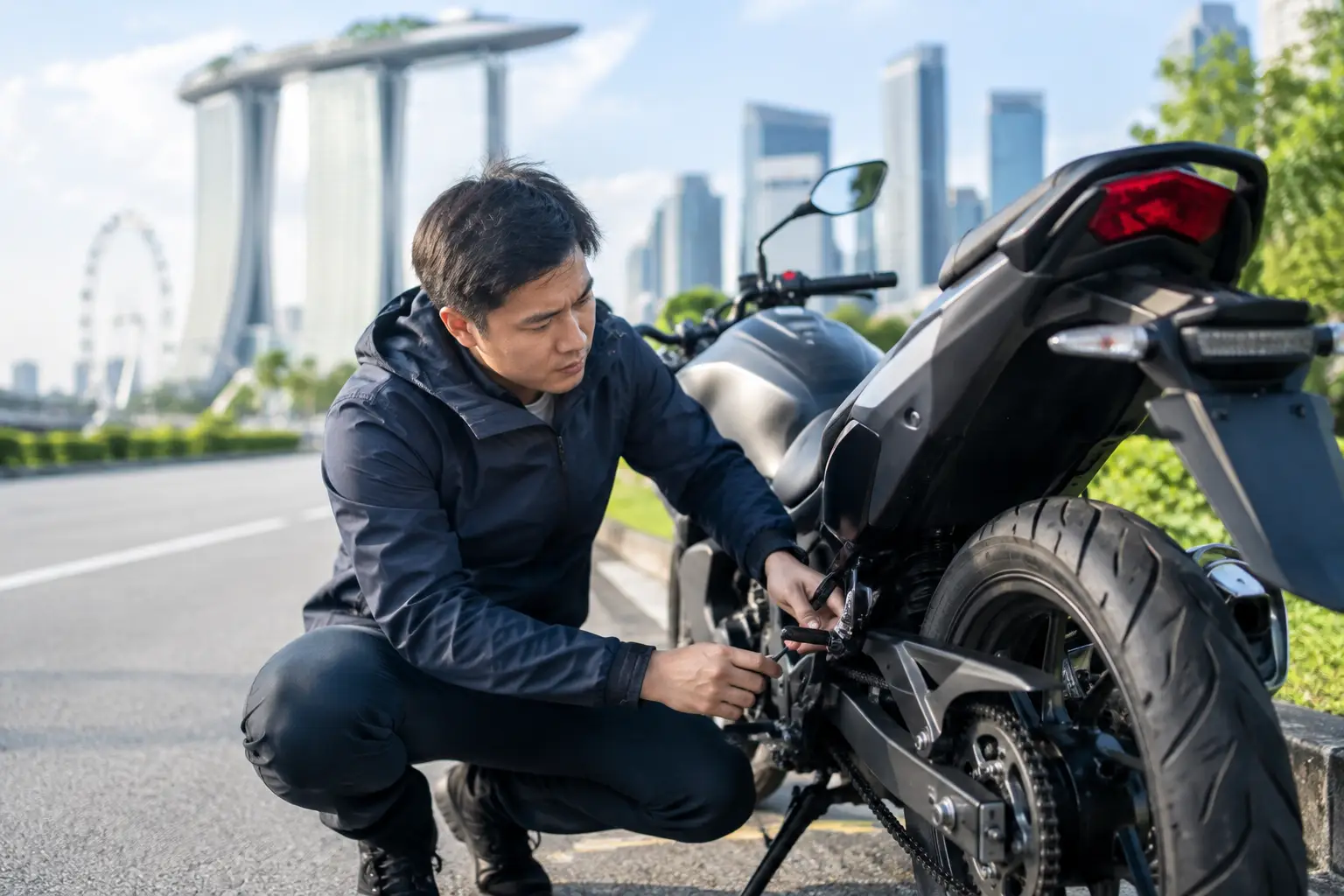
How to Handle Bike Breakdowns on Singapore Roads
A bike that loses power on the PIE, refuses to start outside your workplace, or develops a flat tire before a night ride can turn a normal day into a stressful one fast. Knowing how to handle bike breakdowns gives you a safer, faster way to respond – and helps prevent a small mechanical issue from becoming a roadside hazard or an expensive repair.
For Singapore riders, the priority is never to fix the bike immediately at all costs. The priority is getting yourself out of danger, assessing the situation calmly, and getting the right support. Whether you ride daily on a Class 2B bike or use a bigger machine for weekend trips, this is the practical breakdown plan worth remembering.
How to Handle Bike Breakdowns Safely
The moment you notice something is wrong, reduce speed smoothly and look for the safest available place to stop. Avoid sharp braking, sudden lane changes, or trying to push through a mechanical problem at traffic speed. Signal early, keep a firm grip on the handlebars, and move toward the left shoulder, a lay-by, petrol station, car park, or other safe area away from moving traffic.
If the engine cuts out completely, keep your momentum where possible. Do not panic or make abrupt steering inputs. If you are on an expressway and cannot reach a safe exit, move as far from live lanes as conditions allow. Switch on your hazard lights if your motorcycle has them, and use your phone light or reflective gear at night to make yourself more visible.
Once stopped, get yourself to a safe position first. Do not stand beside the motorcycle facing traffic, especially on a narrow shoulder. If the location feels unsafe, such as a blind bend, tunnel approach, or busy expressway shoulder, call for assistance without attempting a roadside repair.
Make the bike visible
Other road users need time to see you. Turn on hazard lights, if available, and position the bike so it is stable and not obstructing traffic. A compact reflective vest, warning light, or reflective triangle can be useful, but only place anything on the road if it is safe to do so. Your safety matters more than creating a perfect warning setup.
Check the Simple Causes Before You Call
After you are safely parked, take a minute to look for obvious issues. Many breakdowns have a simple cause, particularly on commuter bikes that face daily heat, rain, stop-start traffic, and short trips.
Start with the basics. Check whether there is fuel in the tank and whether the fuel tap is in the correct position on older motorcycles. Confirm that the engine kill switch has not been bumped, the side stand is fully raised, and the bike is in neutral or the clutch is pulled in before starting. These checks take seconds and can save an unnecessary tow-out.
Look at the instrument panel for warning lights, unusual temperature readings, or a weak display. If the bike cranks slowly, clicks repeatedly, or the lights are dim, a flat or failing battery may be the issue. If it starts but stalls when you accelerate, fuel delivery, spark, or an electrical fault could be involved. Do not keep cranking the starter until the battery is drained.
A quick visual check can also reveal a puncture, loose chain, leaking fluid, broken cable, or smoke. Keep your hands away from hot engine parts, exhaust pipes, and the radiator area. Never open a hot radiator cap. If you smell burning rubber, see fuel leaking, or notice heavy smoke, do not restart the bike.
When Not to Ride Any Further
Some issues should end the ride immediately, even if the bike still moves. Continuing can damage the engine, compromise braking, or leave you stranded in a worse location.
Stop and arrange recovery if you have a serious oil leak, coolant leak, overheating warning, damaged tire, loss of brake pressure, steering instability, or loud knocking from the engine. The same applies if the chain has come off, snapped, or is dangerously loose. A chain problem can damage the engine casing or lock the rear wheel, so it is not something to ignore until you get home.
Be equally cautious after an accident or a hard impact with a pothole or curb. A motorcycle may look mostly fine while the wheel, forks, brake disc, or controls are damaged. If the handlebars are misaligned, a lever is broken, or the tire has a visible cut or bulge, choose towing instead of taking a chance.
There is a trade-off here. A minor issue like a loose mirror or a dead phone mount may be manageable for a short, careful ride. But if the fault affects control, braking, tires, fuel, engine temperature, or visibility, the affordable choice is usually to stop early and avoid making the repair larger.
Call for Roadside Help With the Right Details
When you need towing or roadside support, clear information speeds up the response. Tell the support team your exact location, direction of travel, nearby landmark, bike model, plate number, and what happened before the breakdown. Mention whether the bike can roll, whether the key is available, and whether there is a puncture, crash damage, or fluid leak.
Use a map pin where possible rather than guessing your location. On expressways, note the road name, travel direction, exit number, or closest marker. If you are in a multi-story car park, share the level and zone. These details reduce back-and-forth messages when you are already under pressure.
If you ride a rental motorcycle, contact the rental provider before authorizing outside repairs or towing unless there is an immediate safety issue. The provider may have a preferred recovery process, maintenance record, or roadside assistance arrangement. Vroom Leasing riders can rely on 24/7 roadside assistance for support when a breakdown interrupts the journey.
While waiting, keep your phone charged if possible and stay in a well-lit, safe area. Do not accept help that makes you uncomfortable, and do not leave personal items unsecured on the motorcycle. If you must leave the bike, take the key, documents, wallet, and phone with you.
Carry a Small Breakdown Kit
You do not need to turn your under-seat compartment into a workshop. A compact kit is enough to handle small problems and make a roadside wait safer. Pack a tire pressure gauge, basic tire repair tools only if you know how to use them, a small flashlight, rain gear, gloves, a phone charging cable, and a few zip ties.
It also helps to carry your roadside assistance contact details, vehicle documents, and emergency contact information in an accessible place. A small microfiber cloth is useful for checking leaks without touching hot parts, while a compact first-aid kit is sensible for any regular rider.
For riders who commute in Singapore’s frequent rain, add a waterproof pouch for your phone and documents. A dead phone during a breakdown creates a second problem you do not need.
Reduce the Chances of a Breakdown
Not every breakdown is preventable, but routine checks catch many issues before they put you on the roadside. Before a longer ride, check tire condition and pressure, engine oil level, lights, horn, brakes, chain condition, and fuel. Pay attention to changes in how the bike sounds, starts, steers, or brakes. Motorcycles usually give warnings before a complete failure.
Service intervals matter, particularly for bikes used in daily traffic. Oil, tires, batteries, brake pads, chains, and fluids wear gradually, so waiting until a part fails is rarely the best value. A well-maintained rental bike or personal motorcycle is not just more reliable – it is easier to control when road conditions change.
Newer riders should also avoid ignoring warning signs because they are unsure what they mean. A repeated starting issue, a tire that loses pressure, or a new metallic noise is worth checking early. Asking for help before the bike stops moving is always easier than arranging recovery in the rain or on an expressway shoulder.
A breakdown does not have to ruin your day. Pull over safely, assess only what you can check without risk, and call for proper assistance when the fault is beyond a simple fix. The smart rider is not the one who repairs everything roadside – it is the one who gets home safely and gets the bike sorted properly.