



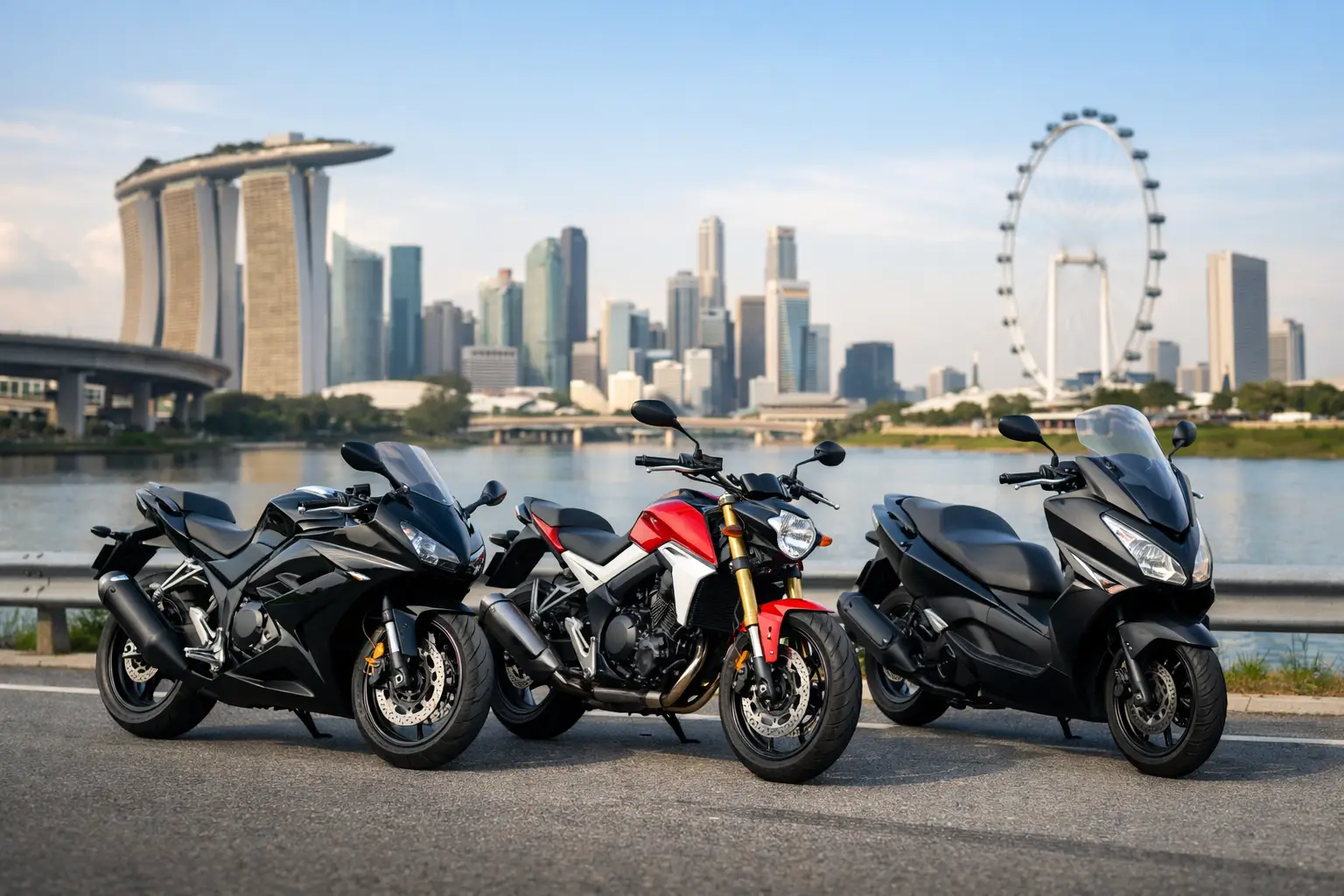
Best Bikes for P Platers for Singapore Roads
Your first bike needs to make rush-hour starts, wet roads, tight parking lots, and daily commuting feel manageable – not like a test of confidence. The best bikes for p platers are not always the fastest-looking or most powerful options. They are the bikes that let you build smooth habits, keep running costs sensible, and get from point A to point B without unnecessary stress.
For most new riders in Singapore, that means looking closely at Class 2B-friendly motorcycles. A lighter bike with predictable throttle response, easy low-speed balance, and a riding position that suits your body will usually serve you better than a bike chosen purely for style.
What Makes a Good P-Plate Bike?
A P-plate rider is still building judgment. That includes reading traffic, managing space around buses and cars, braking smoothly in the rain, and moving confidently through stop-start conditions. Your motorcycle should support those skills rather than demand too much attention from you.
Weight matters more than many new riders expect. A heavier motorcycle can feel fine once it is moving, but pushing it out of a parking space, balancing on an uneven surface, or making a slow U-turn takes more effort. A lighter Class 2B bike is generally easier to catch, control, and live with every day.
Power delivery matters too. A beginner-friendly engine should respond cleanly when you roll on the throttle, without feeling jumpy at low speed. You do not need aggressive acceleration for Singapore roads. You need enough usable power to move safely with traffic, merge when required, and carry out normal commuting comfortably.
Also think about practical ownership or rental costs. Fuel efficiency, tire size, maintenance needs, insurance, parking, and repair costs all affect what a bike really costs over time. A bike that looks cheap at first can become expensive if it uses uncommon parts or needs frequent attention.
Best Bikes for P Platers: Choose by Riding Style
There is no single best bike for every P-plater. Your route, height, confidence level, and whether you carry a passenger can all change the answer. These are the main types worth considering.
Automatic scooters: easiest for urban commuting
A 125cc to 160cc automatic scooter is often the simplest choice for riders who want a straightforward daily commute. With no manual clutch or gear shifting to manage, you can focus more attention on traffic flow, lane position, and braking.
Models such as the Yamaha NMAX 155, Honda ADV160, and similar automatic scooters are popular because they combine accessible power with useful storage. Space under the seat is handy for a raincoat, gloves, small items, or a helmet depending on the model. The step-through design also makes frequent stops less tiring for some riders.
The trade-off is that scooters can feel different from a conventional motorcycle, particularly under hard braking or when riding over uneven roads. Their smaller wheels on certain models may also feel less planted than larger-wheel motorcycles. Still, for a rider whose priority is easy city transport, a scooter is hard to ignore.
Underbone bikes: light, economical, and familiar
Underbone motorcycles remain a strong choice for practical P-plate riding. Bikes in the Yamaha Y15ZR, Yamaha Sniper, Honda Wave, or Honda RS-X style are light, fuel-efficient, and easy to maneuver through urban traffic. They are especially appealing to riders who want a manual gear setup without the bulk of a larger street bike.
Their compact size makes parking easier, while their low weight helps when filtering carefully through slow-moving traffic or handling the bike at walking pace. Many riders also appreciate their strong fuel economy for daily travel.
The compromise is comfort. Underbones often have less wind protection and may feel more exposed on longer expressway rides. Storage is limited as well, so you may need a top box or backpack if you carry work gear regularly.
Naked street bikes: more conventional motorcycle feel
If you want a bike that feels more like a full-size motorcycle while staying within Class 2B territory, a lightweight naked bike is worth considering. Options in the Honda CB150R and Yamaha MT-15 category offer upright ergonomics, broader handlebars, and a planted riding feel that many new riders find reassuring.
The upright position gives you a clear view in traffic and usually puts less pressure on your wrists than a sport bike. Wider handlebars can make low-speed steering feel more natural, particularly when you are still getting comfortable with tight turns and parking maneuvers.
These bikes may cost more to rent or run than a basic underbone, and they do not offer built-in storage. But for riders who value stability, comfort, and a motorcycle-style riding position, they can be an excellent middle ground.
Small sport bikes: good looks, with a comfort check
A small-capacity sport bike such as the Yamaha R15 appeals to many new riders for obvious reasons. It has sharp styling, a sporty riding position, and enough performance for normal Singapore road use. It can be a suitable P-plate bike if you are comfortable with the seating position and can handle it confidently at low speeds.
Before choosing one, sit on it properly. Sport-bike ergonomics can put more weight through your wrists and lean your body forward. That may be fine for a weekend ride, but it can become tiring if you commute in heavy traffic every day. Fairings can also add cost if the bike is dropped at low speed.
A sport bike is not a bad beginner choice by default. It simply makes the most sense for riders who genuinely prefer the riding position and are willing to prioritize style over storage and all-day comfort.
Check These Details Before You Book or Buy
Do not decide from photos alone. The right bike should feel manageable when you are seated, holding the handlebars, and placing at least the balls of both feet securely on the ground. Full flat-footing is not essential for every rider, but you should be able to stabilize the motorcycle without struggling.
Pay attention to the clutch on manual bikes. A smooth, predictable clutch engagement point makes slow-speed riding much easier. If you are renting, ask whether the bike is maintained regularly and check its brakes, tires, lights, mirrors, horn, and chain condition before setting off.
Your typical route should guide the decision. A short ride between home, work, and MRT-adjacent areas favors light weight and fuel efficiency. A longer commute involving expressways may make a 150cc naked bike or scooter feel more comfortable and stable. If you regularly carry a passenger, make sure the seat, suspension, and power delivery suit that use.
You should also be realistic about your budget. The lowest daily rate is useful, but a well-maintained bike with responsive support can save you trouble when you need it most. Vroom Leasing offers Class 2B motorcycle rentals for riders who want a practical way to try a suitable bike before committing to longer-term ownership, subject to availability and rental eligibility.
Rental Is a Smart First Step for New Riders
Buying your first motorcycle is not the only way to learn what suits you. A rental gives you time to experience a bike during your real routine: morning traffic, rain, parking, errands, and weekend trips. You may discover that the sporty bike you wanted feels tiring after an hour, or that a scooter’s storage makes daily life much easier.
For P-platers, this trial period has real value. Your confidence and preferences can change quickly during your first months on the road. Renting lets you gain experience without rushing into a long-term financial commitment, especially if you are still deciding between an underbone, scooter, or naked bike.
Keep in mind that rental conditions, deposits, insurance excesses, mileage limits, and rider eligibility can vary. Read the terms clearly, inspect the motorcycle at collection, and keep a record of any existing cosmetic marks. A reliable rental experience starts with both the provider and the rider being clear about the condition and responsibilities involved.
Do Not Outgrow Your Confidence Too Quickly
The best first motorcycle is the one you can ride smoothly when the road is crowded, slippery, or unfamiliar. It should be easy to start, stop, park, and control without making you tense. A simple, well-maintained Class 2B bike will build better riding habits than a more impressive machine that feels too demanding.
Choose the bike that fits your everyday reality, then give yourself time to grow into the ride. Confidence comes from consistent, calm time on the road – one safe commute at a time.