



Motorcycle Towing Process Explained for Riders
A breakdown on the roadside can feel much bigger when you are on two wheels. The motorcycle towing process explained here gives you a clear picture of what to do from the moment your bike stops moving to the moment it reaches a workshop, home, or safe parking location. The goal is simple: keep you out of danger and get your motorcycle transported without creating further damage.
A proper tow is not just about moving a bike from Point A to Point B. Motorcycles have exposed controls, vulnerable fairings, chain drives, and suspension components that can be damaged by the wrong equipment or poor tie-down technique. That is why the first few decisions you make matter.
What to Do Before the Tow Truck Arrives
Your safety comes first. If your motorcycle loses power, has a puncture, overheats, or will not start, move it out of live traffic if it is safe to do so. On busy Singapore roads or expressways, do not try to diagnose a major issue while standing close to moving vehicles. Switch on your hazard lights if they work, stay visible, and move yourself to a safer position away from traffic.
Once you are safe, take a quick look at the bike. Notice whether there is a fluid leak, smoke, a flat tire, a broken chain, crash damage, or a locked wheel. You do not need to fix the issue on the spot, but this information helps the towing team bring the right equipment and tells the workshop what to inspect.
When requesting assistance, be ready to share your precise location, motorcycle make and model, plate number, condition of the bike, and intended destination. A landmark, expressway exit, car park level, or nearby building name can save time. Let the operator know if the motorcycle is in a tight basement, has a flat tire, cannot roll, or has been in an accident. These details affect how the bike is loaded.
If you are riding a rental motorcycle, contact the rental provider as soon as practical. They may have specific roadside support instructions and may direct the bike to a preferred workshop. Vroom Leasing riders should report the situation promptly so the support team can coordinate the next step and help keep the disruption to a minimum.
Motorcycle Towing Process Explained Step by Step
1. The tow provider assesses the pickup
Before loading, the driver should check the motorcycle’s position, visible damage, wheel condition, and whether it can be rolled freely. This is not unnecessary delay. A bike with a seized rear wheel, bent handlebars, or accident damage may need a different loading approach than a bike with a simple battery issue.
You should also point out any existing scratches, broken panels, loose accessories, or luggage. Taking a few clear photos before the bike is moved is a sensible precaution, especially after an accident or when the motorcycle is a rental. Photograph both sides, the front, rear, odometer area, and any visible damage.
2. The motorcycle is loaded onto suitable equipment
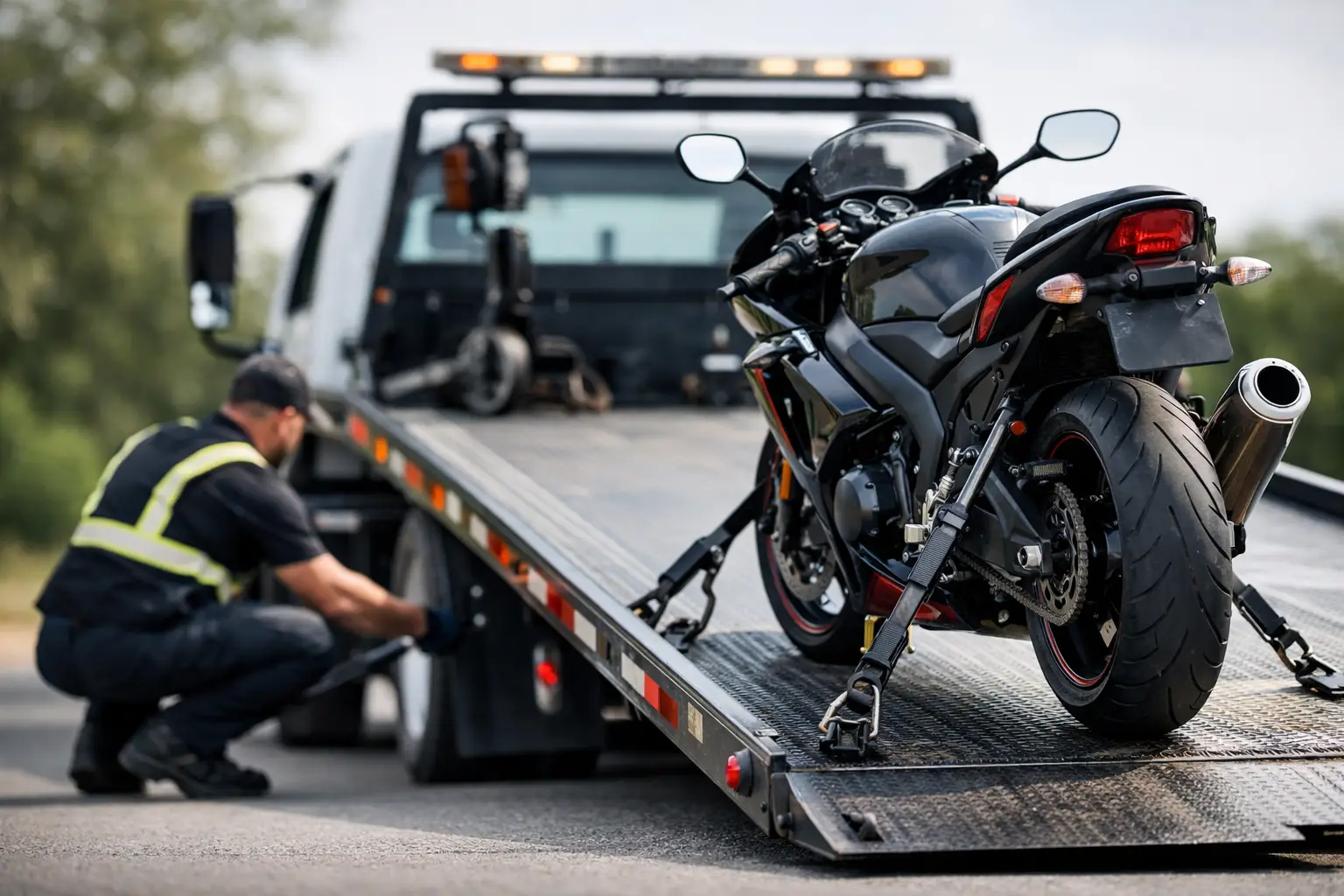
The safest option is usually a flatbed truck or purpose-built motorcycle towing vehicle. The bike is pushed or winched up a ramp and secured upright for transport. This keeps both wheels off the road and avoids adding stress to the engine, transmission, chain, or tires.
Some towing setups use a wheel-lift system designed specifically for motorcycles. This can work when used correctly, but it is not the same as attaching a car-style tow hook to a bike. A motorcycle should never be dragged behind a vehicle with a rope, chain, or improvised strap. Aside from being unsafe, it can damage the steering, suspension, drivetrain, and bodywork in seconds.
For a bike that cannot roll, the team may use a winch, dollies, or extra manpower. This is especially common after collisions, when a tire has come off the rim, or when the motorcycle is blocked in a car park. The right method depends on access and the bike’s condition.
3. The bike is secured at multiple points
A professional tow operator uses rated tie-down straps, typically attached to solid points around the front end and rear of the motorcycle. The bike should remain upright, with its suspension gently compressed to reduce movement during transport. Straps should be positioned carefully so they do not crush brake lines, pinch cables, rub painted panels, or pull against fragile accessories.
The driver should check that the handlebars are straight and stable, the side stand is not carrying the bike’s weight, and loose items are removed or secured. Top boxes, helmets, phone mounts, and personal bags can shift or go missing if left unsecured. Take your valuables with you whenever possible.
A good tie-down job is firm, not brutal. Over-tightening can strain components, while loose straps allow the motorcycle to lean, bounce, or fall. If you have any concern about where a strap is placed, ask before the truck moves. It is reasonable to want to know how your motorcycle is being protected.
4. The motorcycle is transported to the agreed destination
Confirm the destination before departure. It may be a workshop, your residence, a dealership, or a secure parking area. If the bike is going to a repair shop after hours, check that the shop can accept it or that there is an approved place to leave it.
Ask whether you can travel with the tow vehicle. This depends on the vehicle, insurance, passenger capacity, and operator policy. If you cannot ride along, arrange your own transport and keep the driver’s contact details, towing job reference, and destination address.
5. The motorcycle is unloaded and handed over
At the destination, the operator removes the straps and unloads the motorcycle carefully. Inspect the bike before the team leaves. Compare its condition with the photos you took at pickup, and make sure all keys, documents, and removable items are accounted for.
If the motorcycle is headed for repairs, provide the workshop with a short description of what happened. Mention warning lights, unusual sounds, overheating, vibration, difficulty shifting, or anything you noticed before the breakdown. A clear handover can help the technician diagnose the fault faster.
What Affects Towing Time and Cost?
There is no single answer because every recovery is different. A tow from an open roadside location during normal hours is usually more straightforward than a recovery from an expressway, remote area, tight multilevel garage, or accident scene. The distance to the destination also matters.
The motorcycle’s condition can change the job as well. A bike that rolls and steers normally is easier to load than one with crash damage, a locked wheel, or a broken fork. Larger Class 2 motorcycles may require more space and a heavier-duty setup than smaller Class 2B models. Be accurate when describing the situation so the towing provider can quote and dispatch appropriately.
The cheapest option is not always the best value. A poorly secured tow can turn a battery failure or puncture into damaged fairings, bent levers, or a costly repair. Choose a provider that handles motorcycles regularly, uses proper loading equipment, and explains the charge before work begins where possible.
Common Mistakes to Avoid During a Breakdown
Do not leave your motorcycle in a dangerous position just to wait for help. If you cannot move it safely, prioritize your own location and follow instructions from road authorities or the towing provider. Do not attempt to push a heavy bike across fast-moving lanes, even if the workshop is nearby.
Avoid asking a friend to tow your motorcycle using a rope or another bike. The rider being towed has limited control, braking becomes unpredictable, and a sudden stop can cause a crash. Also avoid securing the bike with only its side stand or a single strap in the back of a van. Motorcycles must be restrained upright at multiple points.
Finally, do not authorize a tow without confirming where your motorcycle is going and what you are being charged. Keep the job details in writing if available. It is a small step that prevents confusion when you are already dealing with an inconvenient situation.
A Better Tow Starts With a Clear Call
You do not need to know the mechanical cause of a breakdown before calling for help. Give an accurate location, describe what the bike can and cannot do, remove your personal belongings, and let trained handlers load it correctly. A calm, well-organized recovery protects your motorcycle and gets you back to your commute, delivery run, or weekend ride with less hassle.