



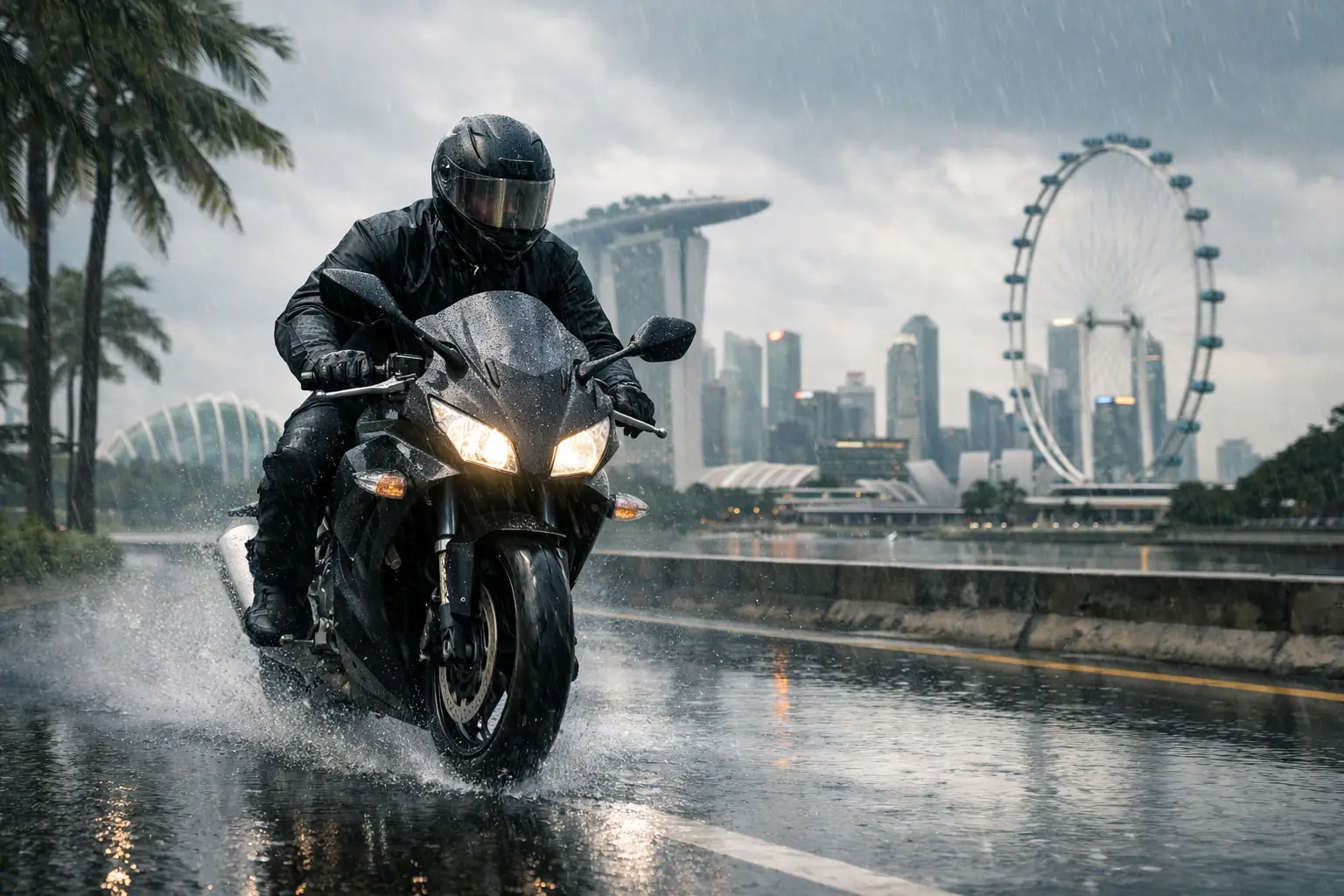
Safe Wet Weather Riding Tips for Singapore
A dry Singapore road can turn slick in minutes. Rainwater mixes with oil, dust, leaves, and paint markings, especially after a long hot spell, and that first shower is often the most slippery part of the day. These safe wet weather riding tips are built for real commutes: traffic lights, expressway spray, covered parking exits, and the sudden downpour that starts halfway to work.
Wet-weather riding is not about being fearless or crawling along at walking pace. It is about leaving yourself more time, more space, and more grip for every decision. A well-maintained bike helps, but your throttle, brakes, vision, and route choices matter just as much.
Start With the Bike Before the Rain Starts
The best time to prepare for rain is when the pavement is dry. Tires are your only contact with the road, so check them regularly for enough tread, correct inflation, and damage such as cracks, nails, or sidewall cuts. A worn tire may feel acceptable in dry conditions but can lose water-clearing ability quickly on wet roads.
Use the tire pressure specified for your motorcycle and load. Do not lower pressure just because it is raining. Underinflation can make handling vague, affect braking, and create its own traction problems. If you are renting a motorcycle, do a quick walk-around before you leave: look at the tires, test the front and rear brakes gently, confirm the lights work, and make sure the mirrors are clean and correctly positioned.
Your chain, brake pads, and lights deserve attention too. Rain can expose a poorly adjusted chain or tired brake components fast. If a brake lever feels spongy, the bike pulls to one side, or a warning light comes on, do not push through the ride. Get it checked before the problem becomes a roadside situation.
Wear Gear That Lets You See and Move
A raincoat that leaks, flaps around, or restricts your arms becomes a distraction when traffic is already demanding your attention. Choose rain gear that fits over your riding gear without limiting your ability to turn your head, operate the controls, or put a foot down securely.
A clear visor is usually safer than a dark visor in rain or low light. Keep it clean and use an anti-fog treatment if fogging is a regular issue. If visibility drops, slightly opening a visor at low speed can help, but avoid leaving it open enough for rain to hit your eyes. Gloves with good palm grip and waterproof footwear with a non-slip sole also make a noticeable difference at traffic lights and fuel stops.
Bright or reflective details are practical, not just cosmetic. In heavy rain, car drivers may be dealing with fogged windows, wiper glare, and road spray. Make it easy for them to spot you early.
Safe Wet Weather Riding Tips for Smooth Inputs
Rain reduces the margin for abrupt movements. The road surface may still offer decent grip, but you cannot always see where oil, standing water, smooth paint, or metal covers are waiting. Your job is to keep the motorcycle settled.
Roll on the throttle progressively, particularly when pulling away from junctions or exiting a corner. Avoid snapping the throttle open while leaned over. On smaller Class 2B bikes, smooth control still matters because a sudden rear-wheel slip can happen on a greasy patch. On more powerful Class 2A and Class 2 motorcycles, the consequences of an aggressive input can arrive even faster.
Brake earlier and build pressure gradually. Use both brakes in a balanced way, keeping the bike as upright as possible before applying stronger braking force. If your bike has ABS, it is a valuable safety feature, but it does not create unlimited traction. ABS can help prevent wheel lock, yet it cannot overcome a wet surface, excessive speed, or following too closely.
Give yourself a larger buffer than usual. In dry traffic, a rider may feel comfortable with a certain following distance. In rain, double it where practical. This gives you time to brake smoothly instead of grabbing a handful of lever when the vehicle ahead stops suddenly.
Treat Painted Lines, Covers, and Puddles With Respect
Some of Singapore’s most common wet-road hazards are not dramatic. White lane markings, directional arrows, crosswalk paint, drain covers, steel plates, and tiled entranceways can become slick when wet. Cross them as upright as possible and avoid braking, accelerating hard, or leaning sharply while on them.
Puddles need a cautious approach because their depth is hard to judge. A shallow puddle may be harmless, but a deeper one can hide a pothole, drain opening, or debris. Slow down before reaching it, keep a relaxed grip on the handlebars, and maintain steady throttle through the water. Do not make a sudden turn in the middle of it.
Standing water also affects other traffic. Cars can throw a wall of spray across your visor, and buses or trucks can hide road conditions ahead. Stay out of their blind spots, avoid riding beside large vehicles for long periods, and leave room to move if the road surface changes unexpectedly.
Look Further Ahead and Choose a Better Lane Position
In rain, your vision needs to work earlier. Scan well beyond the vehicle in front so you can spot brake lights, pooled water, slow-moving traffic, and lane changes before they become urgent. Check mirrors more often, but do not fixate on them. Your main focus should remain where you want the motorcycle to go.
Lane position depends on the road and traffic, but avoid assuming the center of a lane is always best. Oil and grime can collect near the middle, especially around junctions and at stop lines. Often, the tire tracks left by cars offer a cleaner path, though you still need to watch for water pooling in wheel ruts. There is no single perfect position – choose the part of the lane that gives you visibility, space, and the cleanest available surface.
At a stop, leave an escape path. Stop far enough behind the vehicle ahead that you can see its rear tires touching the road. Keep the bike in gear, watch your mirrors, and be ready to move if a vehicle behind is not slowing in time.
Slow Down Before Corners, Not During Them
Corners ask more of your tires because they must handle turning forces as well as braking or acceleration. On wet pavement, reduce speed before you turn, look through the corner, and use gentle steering inputs. Once leaned over, keep the throttle neutral or lightly rolling on rather than chopping it abruptly.
Do not copy a dry-day cornering line without thinking. In wet conditions, a slightly wider, smoother line may help you avoid paint, patches, drain covers, or pooled water. The goal is not to carry maximum speed. The goal is to exit the corner stable, visible, and in control.
If the rear tire slides briefly, stay calm. Keep your eyes up, avoid panic braking, and ease off any aggressive throttle input smoothly. Sudden reactions are more likely to turn a small slip into a bigger problem.
Know When Waiting Is the Smart Call
There are days when the right riding decision is to delay the trip. If rain is so heavy that you cannot clearly see vehicles ahead, water is collecting across the lane, lightning is close, or your visor is constantly flooded, pull into a safe sheltered area and wait. Ten or fifteen minutes can change the conditions significantly in Singapore.
This matters even more for newer P-plate riders who are still building feel for braking and cornering. There is no prize for forcing a ride through conditions that exceed your current comfort and skill level. Plan a little extra travel time during the monsoon season, and let people know if weather will delay you.
If you experience a puncture, breakdown, or mechanical concern in the rain, prioritize getting yourself out of moving traffic. Do not attempt a roadside repair on an exposed shoulder or rush to continue on a bike that does not feel right. Riders using Vroom Leasing can rely on maintained motorcycles and access to roadside support when an unexpected issue interrupts the journey.
Make the Ride Easier on Yourself
Wet-weather confidence comes from repetition, preparation, and good judgment. Practice gentle braking and low-speed control in a safe, open area when the road is damp, not during your first major downpour in rush-hour traffic. Learn how your own motorcycle responds, because tire condition, weight, brakes, and riding position all affect the feel.
Before you set off, check the forecast, pack rain gear where you can reach it quickly, and give yourself permission to take the slower route if it offers better lighting, less standing water, or fewer high-speed lanes. A calm rider who arrives a few minutes later has made the better commute.